
Category: End Times
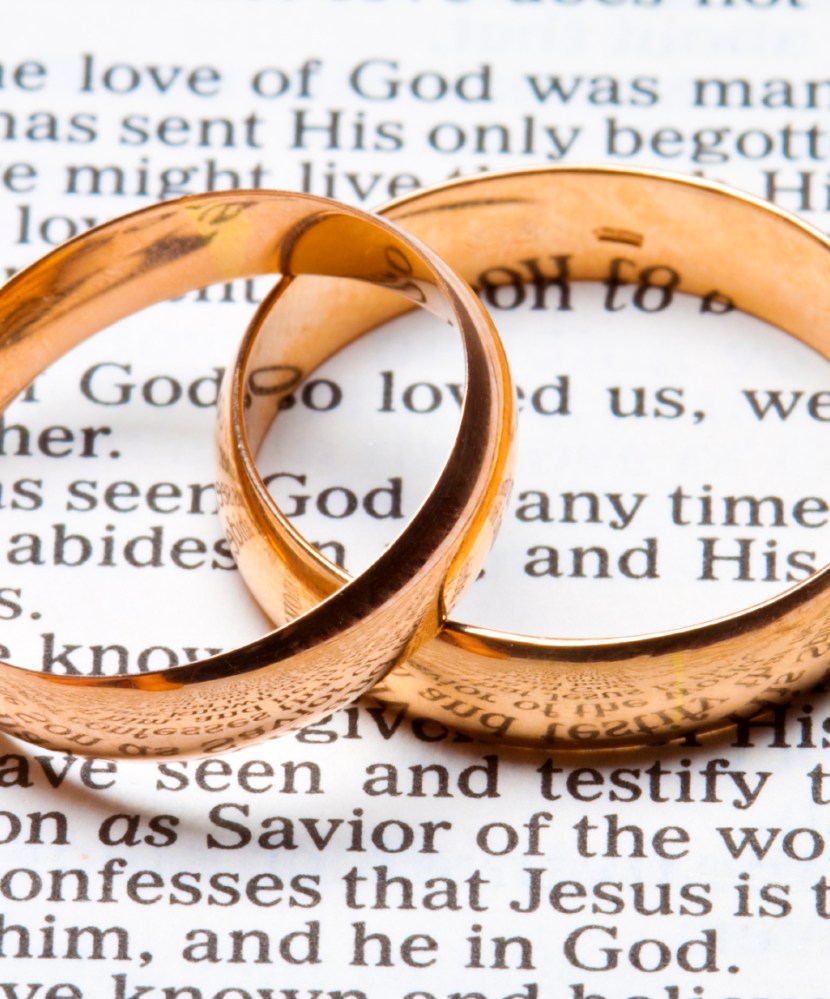
The marriage of the Lamb has come – Revelation 19:6-8
 Previously: Salvation, glory, and power – Revelation 19:1-5
The scripture
Rev. 19:6 – Then I heard something like the voice of a vast multitude, like the sound of cascading waters, and like the rumbling of loud thunder, saying: Hallelujah, because our Lord God, the Almighty, has begun to reign! 7 Let us be glad, rejoice, and give Him glory, because the marriage of the Lamb has come, and His wife has prepared herself. 8 She was given fine linen to wear, bright and pure. For the fine linen represents the righteous acts of the saints. (HCSB)
The marriage of the Lamb has come
In verse 6, John once again hears something like the voice of a vast multitude, further described “like the sound of cascading waters, and like the rumbling of loud thunder.” Likely, this is the same heavenly choir we encounter in verses 1-3, but it is singing a different tune. Rather than praise God for his righteous judgment of the notorious prostitute, the multitude now exults in the coming reign of the Lord and the marriage of the Lamb.
“Hallelujah, because our Lord God, the Almighty, has begun to reign!” the choir sings. We should not imply from these words of celebration that our eternal and omnipotent God has ever failed to reign. The earth – indeed the whole universe – is always under His watchful eye and sovereign hand.
However, these heaven dwellers know full well that Satan, too, has a kingdom. He rebelled against God and took a vast number of fallen angels with him. He usurped the dominion God entrusted to Adam through deceit. As the god of this age and the prince of a dark kingdom in opposition to God, he is the “strong man” of whom Jesus speaks in Mat. 12:29. But in coming to earth and putting on the veil of the flesh, Jesus has entered the strong man’s house and bound him.
Since His finished work on the cross 2,000 years ago, the Lamb of God has been plundering the strong man’s goods – the souls of people – and bringing them into the kingdom of heaven. The judgment of Babylon the Great signals the complete collapse of Satan’s rebellious kingdom. Yet we should comfort ourselves in knowing that the reign of God over all creation has never been in jeopardy.
Continue reading

Salvation, glory, and power – Revelation 19:1-5
 The scripture
Rev. 19:1 – After this I heard something like the loud voice of a vast multitude in heaven, saying: Hallelujah! Salvation, glory, and power belong to our God, 2 because His judgments are true and righteous, because He has judged the notorious prostitute who corrupted the earth with her sexual immorality; and He has avenged the blood of His slaves that was on her hands. 3 A second time they said: Hallelujah! Her smoke ascends forever and ever! 4 Then the 24 elders and the four living creatures fell down and worshiped God, who is seated on the throne, saying: Amen! Hallelujah! 5 A voice came from the throne, saying: Praise our God, all His slaves, who fear Him, both small and great! (HCSB)
Salvation, glory, and power
John hears a “vast multitude” in heaven praising God. Some commentators say these “heaven dwellers” make up a choir that sings of the Lord’s attributes and great works. This likely is the vast multitude from every nation, tribe, people, and language we encounter in Rev. 7:9. They are before the throne of God and serve Him day and night (Rev. 7:15). They also may be the ones the beast from the sea speaks against as he blasphemes God’s name and His dwelling (Rev. 13:6). But the evil one and his minions cannot harm these saints or disrupt their joyous celebration.
“Hallelujah” is a transliteration of a Hebrew word exhorting people to praise the Lord (Heb. halelujah = praise Yah). It is rendered Allelouia in the Greek text and is found 22 times in Ps. 104-150 and four times in Rev. 19:1-6. It is a familiar term in Old Testament prayer language that is documented here in a Christian sense for the first time, according to Jurgen Roloff in Revelation: A Continental Commentary: “Its original meaning was that of a call to praise God, which the worshipping community answers with its praise. However, gradually it developed in Judaism into an independent formula of praise (e.g., Tob. 13:17; 3 Macc. 7:13). The original meaning still flickers through here: the singers summon themselves and others to praise God by means of the Hallelujah. In postbiblical Judaism the perception was represented that this acclamation was reserved for the end time” (pp. 210-11).
Some commentators note that while David spoke 103 sections of the Psalms, he only uttered Hallelujah when he saw the fall of the godless. This fits well with what we see in Revelation 19. Those who witness the fall of Babylon are summoned to join the praise of God, who has defeated His foes.
Continue reading

Shipmaster, seafarer, sailor – Revelation 18:17b-20
Previously: Merchants’ lament – Revelation 18:11-17

The scripture
Rev. 1:17b –And every shipmaster, seafarer, the sailors, and all who do business by sea, stood far off 18 as they watched the smoke from her burning and kept crying out: “Who is like the great city?” 19 They threw dust on their heads and kept crying out, weeping, and mourning: Woe, woe, the great city, where all those who have ships on the sea became rich from her wealth, for in a single hour she was destroyed. 20 Rejoice over her, heaven, and you saints, apostles, and prophets, because God has executed your judgment on her!” (HCSB)
Shipmaster, seafarer, sailor
Shipmasters and other seamen who have grown rich by transporting the world’s treasures to satisfy Babylon’s appetite for luxury now add their lament to that of the kings and merchants. John records that all who do business by sea stand far off as they watch the smoke from Babylon’s burning and continuously cry out, “Who is like the great city?” This cry is similar to the one in Rev. 13:4 as the earth’s inhabitants worship the beast and say, “Who is like the beast? Who is able to wage war against him?”
These cries acknowledge more than allegiance; they reveal dependence upon the beast and upon the great city for security and privilege. Now that the city has been destroyed, the seafarers do not know where to turn for their business transactions. When the beast is cast into the lake of fire in Revelation 19, his followers will have nowhere to turn for their salvation. As Satan’s kingdom disintegrates and Christ takes His rightful place as the earth’s king, unbelievers will realize their folly in trusting their souls to sinful men and worldly institutions. An interesting side note: One day the seafarers will find that even the sea is gone (Rev. 21:1). Continue reading
Merchants’ lament – Revelation 18:11-17
Previously: The kings of the earth – Revelation 18:9-10
The scripture
Rev. 18:11 – The merchants of the earth will also weep and mourn over her, because no one buys their merchandise any longe r – 12 merchandise of gold, silver, precious stones, and pearls; fine fabrics of linen, purple, silk, and scarlet; all kinds of fragrant wood products; objects of ivory; objects of expensive wood, brass, iron, and marble; 13 cinnamon, spice, incense, myrrh, and frankincense; wine, olive oil, fine wheat flour, and grain; cattle and sheep; horses and carriages; and slaves and human lives. 14 The fruit you craved has left you. All your splendid and glamorous things are gone; they will never find them again.
15 The merchants of these things, who became rich from her, will stand far off in fear of her torment, weeping and mourning, 16 saying, Woe, woe, the great city, dressed in fine linen, purple, and scarlet, adorned with gold, precious stones, and pearls, 17 for in a single hour such fabulous wealth was destroyed! (HCSB)
The merchants’ lament
The merchants’ lament echoes that of the kings but focuses on the prostitute’s costly apparel and accessories. They mourn the fact that such wealth is laid waste in so short a time.
The Greek word translated “weep” in verses 9 and 11 means a loud lamentation as opposed to private grief. Those who built their empires with merchandise cannot buy a storehouse large enough to contain their anguish. Take note that the merchants do not sorrow over the fate of the prostitute but over the loss of their business with her. It is a most excruciating grief because it is completely self-absorbed.
Continue reading

The kings of the earth – Revelation 18:9-10
Previously: Pay her back – Revelation 18:6-8
The scripture
Rev. 18:9 – The kings of the earth who have committed sexual immorality and lived luxuriously with her will weep and mourn over her when they see the smoke of her burning. 10 They will stand far off in fear of her torment, saying: Woe, woe, the great city, Babylon, the mighty city! For in a single hour your judgment has come. (HCSB)
The kings of the earth
 The declaration of the fall of Babylon the Great is recorded in verses 1-8. The next 11 verses form a litany of lamentation as kings, merchants, shipmasters, seafarers, and business people mourn the destruction of the great city where they have made their fortunes. There is a three-fold pattern to these laments: first, a cry of sorrow; second, a summary of what has been lost; and third, a confirmation of the suddenness of Babylon’s fall. A single verse follows – verse 20 – calling for a different response from heaven. The saints, apostles, and prophets are to rejoice because God has executed judgment on their behalf.
The first to mourn are the kings of the earth who have committed sexual immorality and lived luxuriously with the Mother of Prostitutes. The world system over which Satan is prince has seduced common men and women into becoming uncommon beasts who wield terrifying power over their subjects. While these rulers live in barricaded opulence, the people who look to them with hope live in squalor a stone’s throw away. From the cult of Caesar worship to the killing fields of Cambodia, rulers with a desire to make themselves like the Most High God become madmen who use Christians as human torches or slaughter millions in the name of ethnic or political cleansing. The kings of the earth gladly mix politics, religion and commerce to solidify their power and cement their place in history.
 OnceDelivered.net