
Category: Angel of the Lord

The Presence in the Pillar

When Pharaoh finally lets the Israelites go, Yahweh leads his people on a round-about journey through the wilderness rather than a shortcut through the land of the Philistines. This is because God knows his people will change their minds if they go directly from captivity into warfare. So, the Lord takes them toward the Red Sea, where they camp at Etham on the edge of the wilderness.
Exodus 13:21-22 picks up the story:
The LORD went ahead of them in a pillar of cloud to lead them on their way during the day and in a pillar of fire to give them light at night, so that they could travel day or night. The pillar of cloud by day and the pillar of fire by night never left its place in front of the people.
Note several key truths in this passage:
First, the Lord goes ahead of the Israelites. He has vowed to lead them to the Promised Land, and he may be taken at his word.
Second, the Lord is in the pillar. The pillar of cloud and fire is a real phenomenon the Israelites experience with their senses – a theophany in which Yahweh crosses the threshold between the spirit realm and the physical world.
Continue reading
The Destroyer

When the angel of the Lord appears to Moses in the burning bush, he presents himself as a deliverer. He has seen the suffering of his people, and he has come down to snatch them from Pharaoh’s grasp and lead them to the Promised Land. Now, in Exodus 12, the angel perhaps appears again when the last of ten plagues descends on the Egyptians.
Hardened in heart, despite judgments involving such unsavory elements as blood, frogs, lice, hail, and darkness, Pharaoh stands defiantly as Moses announces the final feat that proves the power of the one true God over the magic arts of Pharaoh’s priests. But by morning, the death of every unprotected firstborn male breaks the tyrant’s will and forces him to let the Israelites go.
Passover is the oldest continuous feast in recorded history. Even today, the observance is celebrated in Jewish homes around the world. But in a sense, there is only one Passover. It took place in Egypt 3,500 years ago, when the Lord passed over the homes of believing Hebrews who sacrificed a spotless lamb and sprinkled its blood on their doorposts, sparing the loss of their firstborn males.
In the same way, there is only one occasion when the Messiah’s body is pierced and his blood poured out for our sins. To memorialize his coming death, Jesus institutes the Lord’s Supper during the feast of Passover. Just as faithful Jews have observed the Passover for thirty-five centuries, Christians have observed the memorial meal of the Lord’s Supper for two thousand years. That’s why the apostle Paul reminds the Corinthians, “For Christ our Passover lamb has been sacrificed” (1 Cor. 5:7).
But is Jesus actually in Egypt on the night of the first Passover?
Continue reading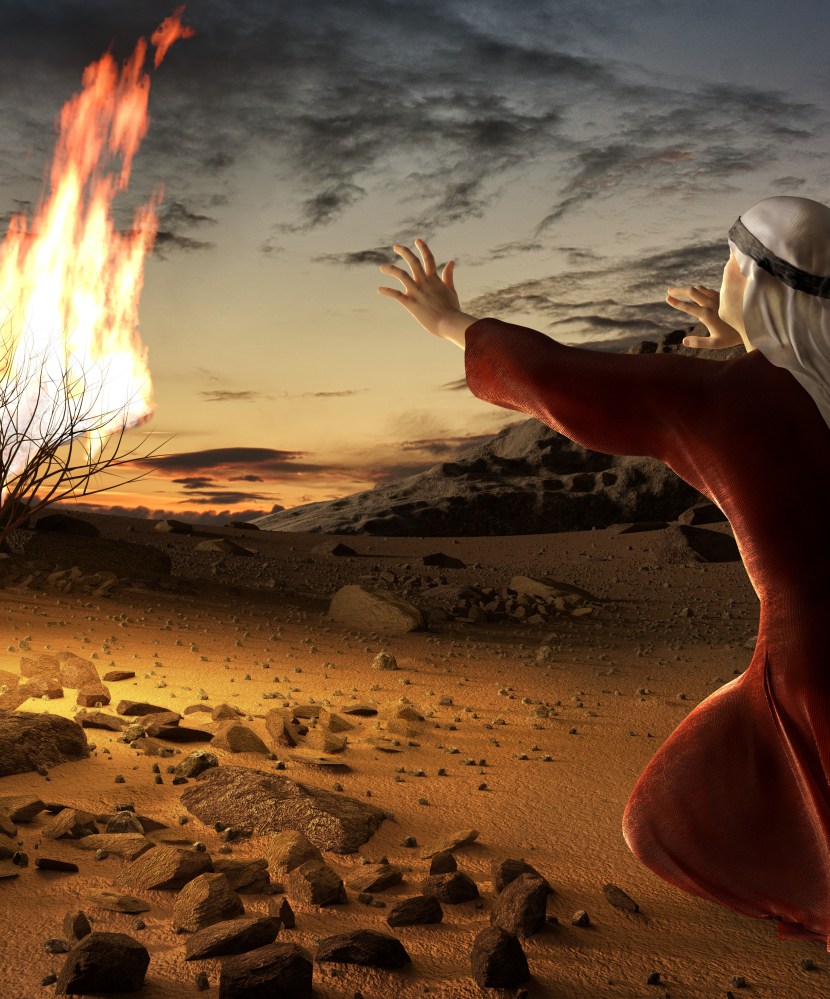
The Angel of the Lord at the Burning Bush
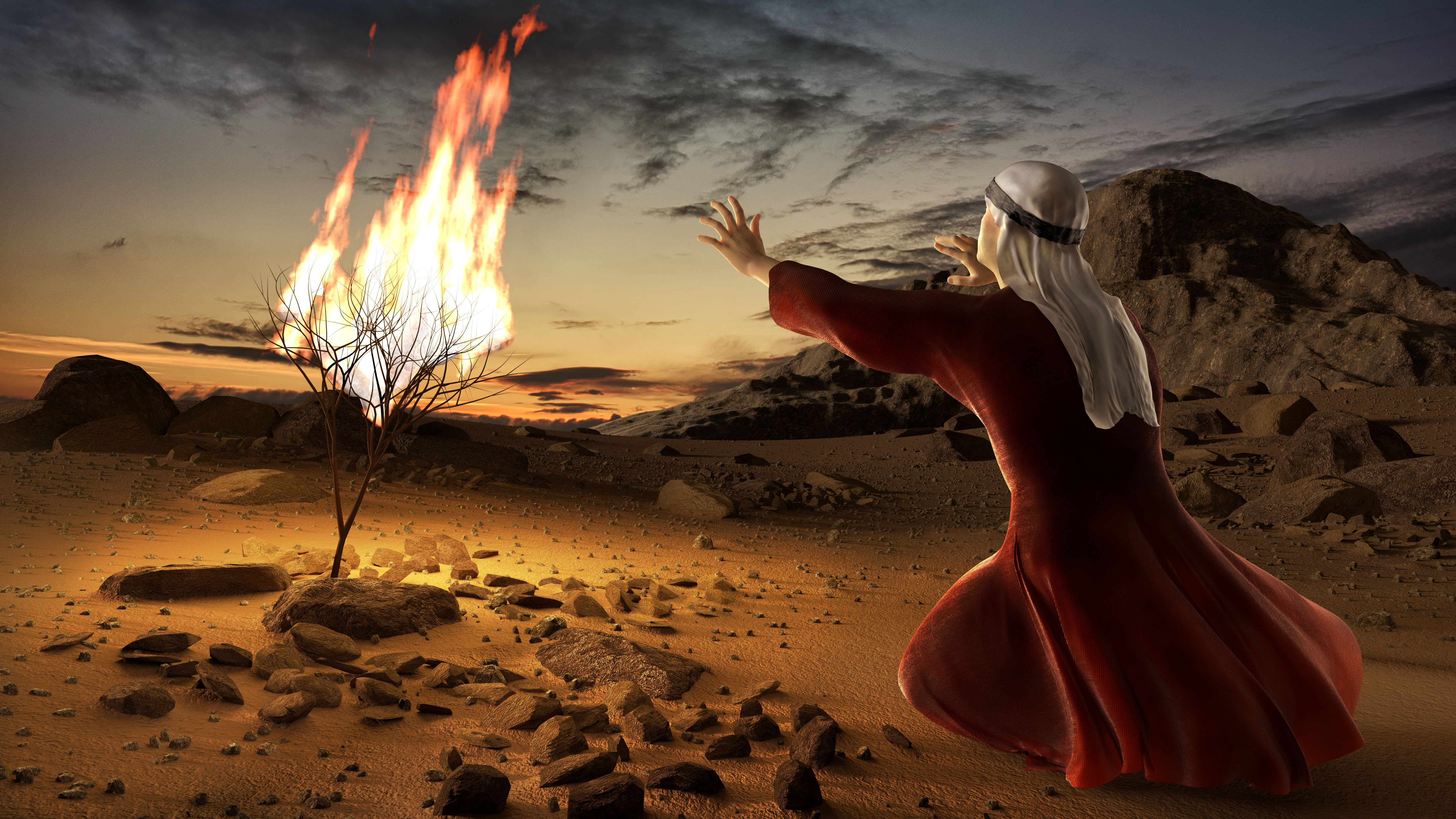
In the Book of Exodus, we encounter the angel of the Lord in several contexts: (1) as a voice from a burning bush; (2) as the destroyer on the night of Passover; (3) as the divine presence in a pillar of cloud and fire; and (4) as the promised deliverer who leads the Israelites from Egypt to the Promised Land.
Each appearance is unique. Moses’ encounter with the angel on the backside of the desert ends forty years of hard-knocks leadership development and launches a dramatic return to ministry. After Moses goes back to Egypt, on the night of the tenth and final plague, one called the destroyer sweeps through the land and strikes the firstborn of every male not sheltered behind a doorpost stained with lambs’ blood. Then, with Pharaoh and his army in hot pursuit of the escaping Israelites, the angel of God inhabits a pillar of cloud and fire that separates God’s people from their pursuers. Finally, the Lord reminds Moses and the Israelites that he is sending my angel to see them safely into the land of milk and honey.
In this post, we’ll examine the angel’s appearance to Moses at the burning bush.
Continue reading
Is Melchizedek the Preincarnate Christ?

Before the angel of the Lord appears to Hagar in Genesis 16, Abram encounters a curious king and priest named Melchizedek. He appears suddenly in the wake of Abram’s victory over King Chedorlaomer and his allies. We read about his brief visit to Abram in Genesis 14:17-24.
Melchizedek, king of Salem (Jerusalem) and a priest of God Most High, presents bread and wine to Abram and his battle-weary men. He further bestows a blessing on Abram in the name of El Elyon, God Most High, and praises God for granting Abram victory. In response, Abram offers Melchizedek a tithe of all the items he has won in battle, an act that acknowledges the priest as one who ranks higher spiritually than Abram.
All of which begs the question: Is the story of Melchizedek the first recorded appearance of the angel of the Lord? Put another way, is Melchizedek the preincarnate Christ?
While he could be, it seems more biblically faithful to see Melchizedek as a type, or prophetic preview, of Christ rather than as Jesus himself prior to the Incarnation. While we take the position that Jesus comes to Abram as the angel of the Lord in Genesis 17, 18, and 22, the preincarnate Christ does not materialize as an earthly priest or king in Genesis, or anywhere else in the Old Testament.
Continue reading
How the Angel of the Lord is Revealed

When we encounter the angel of the Lord in Scripture, he reveals himself primarily in four ways:
The angel of the Lord speaks
In his first recorded appearance, the angel of the Lord speaks to Hagar after she has been sent away from Sarai. The text strongly suggests a physical manifestation, for the angel finds Hagar by a spring in the wilderness. Later, Hagar names him El-roi, which means “God sees me,” and she asks, “In this place, have I actually seen the one who sees me?” (Gen. 16:13).
At the same time, the angel converses with Hagar. He asks where she has come from and where she is going. He tells Hagar to return to Sarai, and he promises to greatly multiply her offspring, although Ishmael is going to be a wild donkey of a man who battles with everyone around him (Gen. 16:8-12). Later, after Abraham has sent Hagar and her son away, the angel calls to Hagar from heaven and comforts her (Gen. 21:17-18).
When Abraham takes Isaac up Mount Moriah and is about to thrust his knife into the son of promise, the angel of the Lord calls from heaven to Abraham to spare the young man. Then, the angel calls a second time, promising to bless Abraham and his offspring (Gen. 22:11-18).
As one other example, the angel of the Lord sends Elijah to the messengers of King Ahaziah and later instructs the prophet to go with a captain of fifty soldiers to meet with the king (2 Kings 1:3, 15).
Continue reading OnceDelivered.net