
Not Written from the Foundation of the World: Revelation 13:8 and 17:8 – Part 1
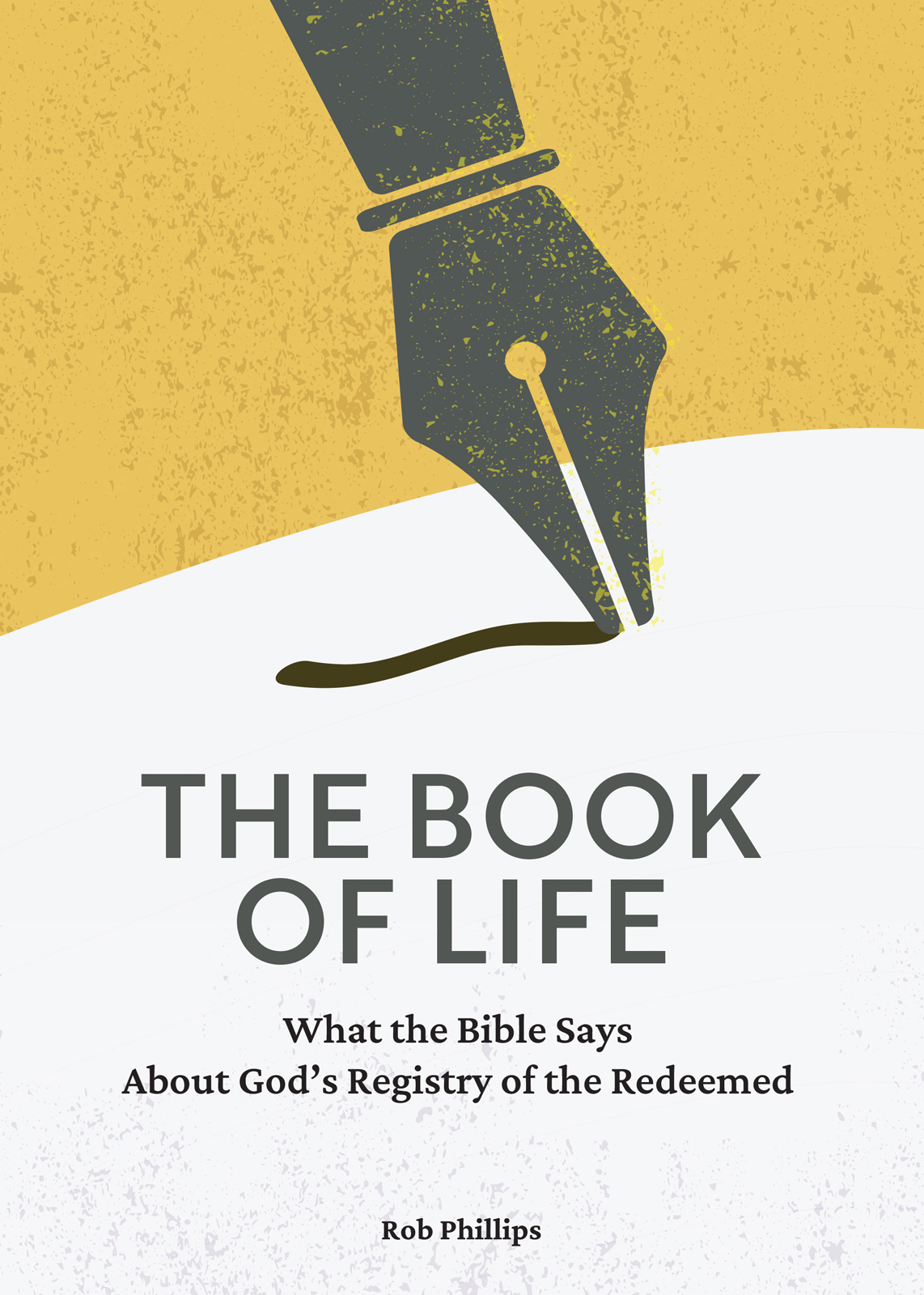
This is another in a series of excerpts from The Book of Life: What the Bible Says about God’s Registry of the Redeemed from High Street Press and available at Amazon. This except comes from Chapter 17: Not Written from the Foundation of the World: Revelation 13:8 and 17:8.
All those who live on the earth will worship it [the beast], everyone whose name was not written from the foundation of the world in the book of life of the Lamb who was slaughtered (Rev. 13:8).
The beast that you saw was, and is not, and is about to come up from the abyss and go to destruction. Those who live on the earth whose names have not been written in the book of life from the foundation of the world will be astonished when they see the beast that was, and is not, and is to come (Rev. 17:8).
Both verses feature the phrase “from the foundation of the world.” In the first instance, John seems to tie Jesus’s crucifixion to the foundation of the world. In the second, he links the book of life to the world’s foundation. Both verses speak of a beast, the book of life, the foundation of the world, and names not written.
Keep in mind that the New Testament phrase, “the foundation of the world,” is fraught with difficulty. In chapter 4, we wrestled with the Greek word rendered “foundation” (katabole), concluding that it refers to creation in New Testament usage. We also examined the word kosmos, or “world.” While there are many ways in which kosmos is applied in Scripture, when it’s used to describe the world’s foundation, it means the created order. So, the New Testament writers consistently apply “the foundation of the world” to God’s creation of the universe.
We also should remember the importance of the Greek prepositions “from” (apo) and “before” (pro) when they appear in references to the foundation of the world. When “from” appears before “foundation,” it signifies something that occurs across time, and thus unfolds throughout human history. When “before” precedes “foundation,” it depicts something that occurs prior to creation.
In both verses we address in this chapter – Revelation 13:8 and 17:8 – John writes of events occurring from the foundation of the world. That is, John connects the writing of names, or not writing names, in the book of life with time, not eternity.
There’s no biblical reference to a book of life prior to creation, although our omniscient God has always known about everyone who would come into existence, and he has uniquely known and loved every redeemed person. So, it seems reasonable to conclude that the book of life is not for God’s benefit, but for the benefit of all human beings. Our names are entered in the book of life in real time – perhaps at the creation of the physical universe or on the day of our birth. Then, he erases the names of the unrepentant wicked when they have fully and finally rejected his gracious offer of salvation.
Finally, as we address these two verses, let’s simplify our efforts by reminding ourselves that: (1) our focus in this study is the book of life, not the identity or actions of the antichrist in the last days; (2) John is writing about the same group of people in both verses: those whose names are not written in the book of life; and (3) John is referring to the same book in both passages: the book of life.
The Lamb’s book
John writes about “the book of life of the Lamb who was slaughtered” (Rev. 13:8). Here and in Revelation 21:27 are the only explicit ties of the Lamb to the book of life in Scripture. And yet, the book of life is the Lamb’s book. We explored the Lamb’s book and the book of life as synonymous terms in chapter 3.
Meanwhile, it’s important to note that the three persons of the Godhead work collaboratively to redeem mankind. In the eternal covenant of redemption, Jesus is the person of the Trinity who leaves heaven, adds sinless humanity to his deity through the virgin birth, bears our sin debt on the cross, and rises from the dead to conquer Satan, sin, and death. So, the book of life is his book because he has written our names there in his own blood.
Among the persons of the Godhead, Jesus shares our humanity, satisfies the wrath of the Father on our behalf, serves as our Savior and Lord, and holds the keys of death and hades.
Those whose names are excluded from the book of life have set themselves in opposition to the Lamb and are willing worshipers of the beast. Followers of Jesus, however, may rest assured of their eternal destiny. As Leon Morris writes, “John wants his little handful of persecuted Christians to see that the thing that matters is the sovereignty of God, not the power of evil. When a man’s name is written in the book of life he will not be forgotten. His place is secure.”
Matthew Henry provides further insight into Revelation 13:8:
[The antichrist] is also limited as to the persons and people that he shall entirely subject [to] his will and power; it will be only those whose names are not written in the Lamb’s book of life. Christ had a chosen remnant, redeemed by his blood, recorded in his book, sealed by his Spirit; and though the devil and antichrist might overcome their bodily strength, and take away their natural life, they could never conquer their souls, nor prevail with them to forsake their Saviour and revolt to his enemies.
The book of life belongs to Jesus, who is described in Old Testament sacrificial terms as the slain lamb (Isa. 53:7; cf. John 1:29, 36; Rev. 5:6, 9). The redeemed have been bought with the precious blood of Christ, a lamb without blemish or defect (1 Pet. 1:19). The saints make their robes white in the blood of the Lamb (Rev. 7:14; see also 3:5, 18; 4:4; 6:11; 7:9; 19:14).
The death of Jesus for the sins of the world was not an accident, nor was it God’s Plan B, cobbled together after Adam’s fall. It was decided before the foundation of the world (Eph. 1:4; 1 Pet. 1:20). This fact ensures believers that their salvation is secure, being known to God from eternity past.
This boils down to a simple, yet profound, truth: All along, Christ was the goal of creation, and all creation was made by him and for him (John 1:1-3; Col. 1:15-17).
Revelation 13:8
All those who live on the earth will worship it [the beast], everyone whose name was not written from the foundation of the world in the book of life of the Lamb who was slaughtered (Rev. 13:8).
John is writing of a future event, when the antichrist emerges and receives the worship of the entire unbelieving world – “everyone whose name was not written ….” These people have set themselves against God. They want nothing of his grace, and they seek no citizenship in his kingdom. In contrast, they willingly worship a false Messiah.
Of the eleven times the phrase “those who live on the earth” occurs in Revelation, this is the only passage to note that “all” the earth dwellers are involved, thus stressing the universal nature of worship of the beast in the last days.4 Since universal worship of an antichrist did not take place in the days of the Caesars, this appears to point to worship of a future antichrist. Further, the tie between “all” and “everyone whose name was not written from the foundation of the world in the book of life” excludes the possibility that John is using hyperbole and broad generalizations. “All” and “everyone” mean just what they say.
The ones led astray by the beast’s blasphemies are those whose names have not been written in the book of life. Of course, the reverse is true. Those whose names are in the book of life refuse to worship anyone but God. Kendell Easley writes:
Although God has allowed evil, yet from the beginning he planned the ultimate remedy for overcoming evil: the sacrificial death of his Son. The slaughtered monster’s evils will run rampant only for a short period of time. The consummation will reveal the slaughtered Lamb’s victory and rule for eternity. Planned from the creation of the world, his kingdom will endure forever and ever.
There’s robust debate over the proper translation of Revelation 13:8. Does John mean the book of life was written from the foundation of the world? Or is he saying the Lamb was slain from the foundation of the world?
So far as the Greek goes, either translation is possible, and perhaps both are true. Those who argue in favor of the book of life being written from the foundation of the world point to a parallel passage in Revelation 17:8, which clearly ties the book of life to the world’s creation: “Those who live on the earth whose names have not been written in the book of life from the foundation of the world will be astonished when they see the beast that was, and is not, and is to come” (emphasis added). This, they contend, aligns with Ephesians 1:4, where Paul writes that God has chosen believers in Christ “before the foundation of the world.”
In support of this view, John Calvin writes, “The book of life is the roll of those who are fore-ordained to life …. God has this roll laid up with Himself. Hence the book is nothing but His eternal counsel, determined in His own breast.”
John Walvoord agrees that the words “from the foundation of the world” relate to “the time in eternity past when the names were written in the book of life, rather than to Christ’s crucifixion, since He was not crucified when the world was created. As Paul wrote, those who were saved were foreordained to salvation before Creation (cf. Eph. 1:4).”
But critics who favor a translation in which Jesus is the Lamb slain from the foundation of the world – from, not before – say this view inserts meaning into the text that John never intended. They point to the words of Peter: “He [Jesus] was foreknown before the foundation of the world but was revealed in these last times for you” (1 Pet. 1:20). The word “foreknown” refers to eternity past, while the phrase “in these last times” points to Christ’s work in human history; there’s a clear distinction between their places on God’s redemptive timeline. Further, as we’ve already noted, the phrase “from the foundation of the world” locates the action in time, rather than before time.
Robert Mounce writes, “It is better in this case to follow the order of the Greek syntax and read, ‘the Lamb that was slain from the creation of the world.’”
No matter how the issue is resolved, it’s important to keep in mind the unbreakable connection between Jesus and the book of life. As G. K. Beale writes, “Because the book of life is unreservedly ascribed to Christ, the salvation of all, implicitly including OT saints, is represented as depending on the one redemptive act of Christ.”
Those who pledge allegiance to the antichrist do not have their names written in the book of life. Therefore, the Lamb denies them protection from the deception of the beast and the false prophet. In contrast, as Beale points out:
Genuine believers have assurance that their souls can weather any Satanic storm because of the safety accorded by the Lamb’s book. This safety is the precreation identification of God’s people with the Lamb’s death, which means that they also identify with his resurrection life, which protects them from spiritual death and ultimate deception. No one can take this life from them.
Next: Not Written from the Foundation of the World: Revelation 13:8 and 17:8 – Part 2

