
I Am Coming Soon
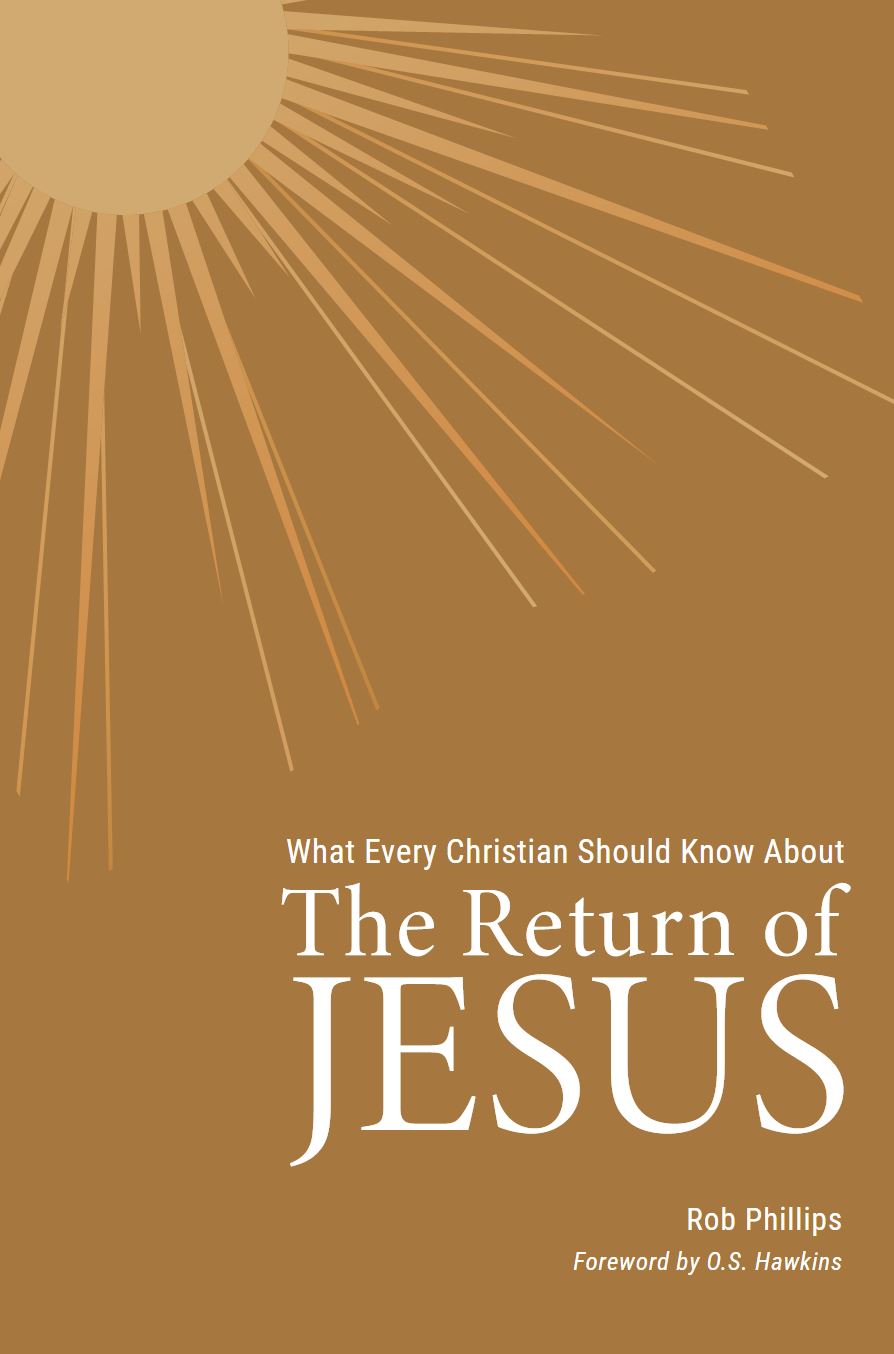
This is another in a series of excerpts from What Every Christian Should Know About the Return of Jesus, released by High Street Press and available at Amazon.
Throughout history, the element of surprise has birthed many dramatic victories. In 1184 B.C., a massive wooden horse is left at the gates of Troy, ostensibly as an offering to the goddess Athena. The horse, however, conceals soldiers who, once wheeled into the city, open the gates for an invading Greek army.
A detachment of 2,400 troops crossing the icy Delaware River on Christmas night of 1776 uses the cover of darkness and the drunken stupor of defending German troops (whom the British hired as mercenaries) to secure a surprise victory for General George Washington’s beleaguered Continental Army.
And in the early hours of June 5, 1967, the Israeli Air Force launches Operation Mivtza Moked with two hundred aircraft. The pilots catch their Egyptian counterparts napping. By the end of the day, five hundred Egyptian aircraft are destroyed, and their military airstrips are rendered inoperable. Jordanian and Syrian aircraft are similarly targeted. As a result, the Six-Day War radically alters the geopolitics of the Middle East.
Unlike these historic upsets, the return of Christ doesn’t hinge on stealth. Jesus is not returning in disguise. He’s not scheming with Mother Nature. Nor is he descending from heaven under the radar. Quite the contrary. Jesus openly tells us he’s coming back. He offers signs as obvious as a red sky at dawn. He urges us to be ready at all times. Scripture foretells his return as personal, physical, visible, and powerful. John declares that “every eye will see him” (Rev. 1:7).
And yet, it’s clear from Scripture that Christ’s return will catch many people off guard. There’s no excuse for this, any more than the Trojans, British, or Egyptians should have been surprised when invading armies breached their defenses. We have a particular advantage in that Jesus states plainly he’s coming back – and he doesn’t hide the particulars of his return, only the day and hour.
And yet, that proves to be the catch for many people. We simply don’t know when Jesus is returning, only thathe’s coming back – and coming back soon.
Soon
Consider these passages from the Book of Revelation:
The revelation of Jesus Christ that God gave him to show his servants what must soon take place. He made it known by sending his angel to his servant John, who testified to the word of God and to the testimony of Jesus Christ, whatever he saw. Blessed is the one who reads aloud the words of this prophecy, and blessed are those who hear the words of this prophecy and keep what is written in it, because the time is near (Rev. 1:1-3, emphasis added).
Then he said to me, “These words are faithful and true. The Lord, the God of the spirits of the prophets, has sent his angel to show his servants what must soon take place” (Rev. 22:6, emphasis added).
“Look, I am coming soon .…” (Rev. 22:6-7, emphasis added).
“Look, I am coming soon, and my reward is with me to repay each person according to his work” (Rev. 22:12, emphasis added).
He who testifies about these things says, “Yes, I am coming soon.” Amen! Come, Lord Jesus! (Rev. 22:20).
“Near” and “soon” are relative terms. An asteroid passing within 1.2 million miles of Earth in January 2022 got NASA’s attention, as do all so-called near-earth objects that breach a thirty-million-mile perimeter around our planet.2 And anyone stuck on hold during a phone call with an internet provider takes little comfort in hearing the recurring message, “We look forward to serving you soon.”
So, we shouldn’t be too hard on Jesus and the apostles when they speak and write about the nearness of the Lord’s return. Yes, it’s been nearly two thousand years since Jesus ascended into heaven and angels told the gawking apostles to watch for his reappearance. But, perhaps, we may take comfort in knowing that the apostles seem to believe they’ll be alive to witness the second coming.
Imminence and uncertainty
There are a number of New Testament passages that reflect the early church’s belief in the imminent return of Jesus, but an uncertainty as to when he returns.
Paul commends the Corinthians because they “eagerly wait for the revelation of our Lord Jesus Christ” (1 Cor. 1:7). He further encourages them: “So don’t judge anything prematurely, before the Lord comes, who will both bring to light what is hidden in darkness and reveal the intentions of the hearts” (1 Cor. 4:5).
Paul advises the unmarried in Corinth:
The time is limited, so from now on those who have wives should be as though they had none, those who weep as though they did not weep, those who rejoice as though they did not rejoice, those who buy as though they did not own anything, and those who use the world as though they did not make full use of it. For this world in its current form is passing away (1 Cor. 7:29-31).
He further urges all Corinthian believers to be holy, warning that they’re living in “the ends of the ages” (1 Cor. 10:11).
Paul reminds the Philippians, “Our citizenship is in heaven, and we eagerly wait for a Savior from there, the Lord Jesus Christ” (Phil. 3:20).
The writer of Hebrews reminds us that God has spoken to us by his Son in “these last days” (Heb. 1:2). James encourages his readers to “be patient until the Lord’s coming…. Strengthen your hearts, because the Lord’s coming is near…. Look, the judge stands at the door!” (Jas. 5:7-9). And Peter writes that Jesus was “foreknown before the foundation of the world but was revealed in these last times for you” (1 Pet. 1:20).
Christians of nearly every era expect to witness the second coming. Curiously, that expectation mirrors the anticipation of every generation of Israelites that Messiah is about to be revealed. While observant Jews await Messiah’s first appearance on Earth, faithful Christians look for his glorious return. “Near” and “soon” are watchwords for both groups.
As we studied previously, Jesus says he’s coming back “like a thief” (Rev. 16:15), meaning his return is both carefully planned and dramatically executed. The Lord also tells us he’s coming at an hour we don’t expect (Matt. 24:44). Many of his parables illustrate the suddenness of his parousia. He’s coming on a day that surprises wicked servants (Matt. 24:45-51), unsuspecting bridesmaids (Matt. 25:1-13), distracted doorkeepers (Mark 13:32-37), and careless homeowners (Luke 12:39-40). In every instance, the wise listener focuses, not on the day or hour of Christ’s return, but on being ready for his return whenever it comes.
The delay is purposeful. It shows that God, not humans or angelic beings, is in sovereign command of human history. It shows that he reckons time differently than we do, and that his delay is a merciful opportunity for sinners to receive him before it’s too late (2 Pet. 3:8-9).
And it’s an act of grace that enables Christians to live in the tension between God’s present and future kingdoms. How would we behave if we knew the exact day of our Lord’s return? Because we’re not omniscient, it’s highly unlikely we could handle the stress of knowing the future, especially a future beyond our control.
Next: Soon, shortly, speedily

