
Tagged: Satan

The Deceiver’s Quiver

The following excerpt is taken from What Every Christian Should Know About Satan. Order your copy in print, Kindle, or Audible versions here.
The Book of Revelation identifies Satan as “the deceiver,” or “the one who leads astray” (ho planon; see Rev. 12:9; 20:10; cf. 20:3, 8). The idea behind this term is to entice someone to wander, like the sheep in Jesus’ parable (Matt. 18:12-13) or the saints of old forced to wander through a world not worthy of them (Heb. 11:38). As Peter Bolt writes, “The title ‘deceiver’ reflects Satan’s endeavors to lead people away from the love and security of our holy God.
Satan’s role as deceiver is grounded in his character as the father of lies (John 8:44; see Chapter 5). His nature – his every tendency – is to distort the truth so that people made as God’s imagers miss the very purpose for which God designed them. But how, exactly, does the evil one accomplish this? He sports a quiver of fiery darts and launches them strategically. Let’s briefly examine eight arrows the evil one hurls to deceive us.
Continue reading
Satan the Deceiver

The following excerpt is taken from What Every Christian Should Know About Satan. Order your copy in print, Kindle, or Audible versions here.
He was known as The Great Impostor and inspired a 1961 film by the same name. Ferdinand Waldo Demara began his nefarious career during World War II. He borrowed an Army buddy’s name, went AWOL, and then faked his own suicide. A string of pseudo careers followed in which Demara portrayed a sheriff’s deputy, a doctor of applied psychology, and a child-care expert.
But Demara reached the pinnacle of his quest for fame during the Korean War, when he masqueraded as a surgeon aboard a Canadian Navy destroyer. There, he successfully completed a string of major surgeries before it was discovered that he was no more qualified to gut a fish than to cut open a human. Drummed out of the military but undeterred, Demara moved on to other mock roles. His final gig: a Baptist minister.
Demara’s life is a fascinating tale of one man’s hunt for genuine status in a make-believe world of his own creation. His success as a deceiver also exposes the soft underbelly of a society whose people are easily duped by one who talks smoothly and claims to serve the greater good.
For Christians, Demara’s story is a teachable moment. We are to guard against those who disguise themselves as “servants of righteousness” and infiltrate the church (2 Cor. 11:15). Even more important, we are to be ever vigilant concerning the greatest impostor of all: Satan.
Continue reading

Temptation, Testing, Trial

The following excerpt is taken from What Every Christian Should Know About Satan. Order your copy in print, Kindle, or Audible versions here.
What’s the difference between a temptation, a test, and a trial? It may help to briefly examine these English words as they appear in Scripture. New Testament writers use the Greek verb peirazo and the noun peirasmos nearly sixty times in a variety of ways. English translators render these words “tempt / temptation,” “test / testing,” or “try / trial,” based on the context.
For example, peirazo may refer to a temptation to think or do something contrary to God’s will (Gal. 6:1; Jas. 1:13). Both times Satan is called the tempter in the New Testament, that’s the meaning we should take away (Matt. 4:3; 1 Thess. 3:5). Because he is the father of lies, a murderer from the beginning, and the unbowed enemy of God, Satan always tempts people to sin. However, God has armed us with everything we need for life and godliness, as Peter writes:
Continue readingHis divine power has given us everything required for life and godliness through the knowledge of him who called us by his own glory and goodness. By these he has given us very great and precious promises, so that through them you may share in the divine nature, escaping the corruption that is in the world because of evil desire.
2 Pet. 1:3-4; cf. 2 Tim. 3:16-17

The Thessalonians’ Tempter

The following excerpt is taken from What Every Christian Should Know About Satan. Order your copy in print, Kindle, or Audible versions here.
The apostle Paul is deeply concerned about the Thessalonians. Not that long ago, he and Silas led a missionary team westward out of Philippi on the Roman road known as the Via Egnatia. They came to Thessalonica, the strategic capital city of the Roman province of Macedonia. This large port city on the Aegean Sea was populated with idol worshipers, as well as those devoted to emperor worship.
In typical fashion, Paul and his comrades located the city’s synagogue and began reasoning from the Scriptures with the Jews, many of whom believed Paul’s bold declaration, “This Jesus I am proclaiming to you is the Messiah” (Acts 17:3). Some devout Greeks who worshiped at the synagogue also were persuaded, along with several prominent women. The church at Thessalonica was established.
But many Jews in the city rejected Paul’s message and became jealous of Paul and Silas. They stirred up an angry crowd that invaded the home where the missionaries resided. Unable to find Paul, they dragged the homeowner (Jason) and other new believers before city authorities, who demanded a security payment to ensure against further disturbances. That night, the Thessalonian believers sent Paul and Silas to Berea, where they continued their missionary work (Acts 17:1-10).
Continue reading
Satan’s Temptation of Jesus
The following excerpt is taken from What Every Christian Should Know About Satan. Order your copy in print, Kindle, or Audible versions here.
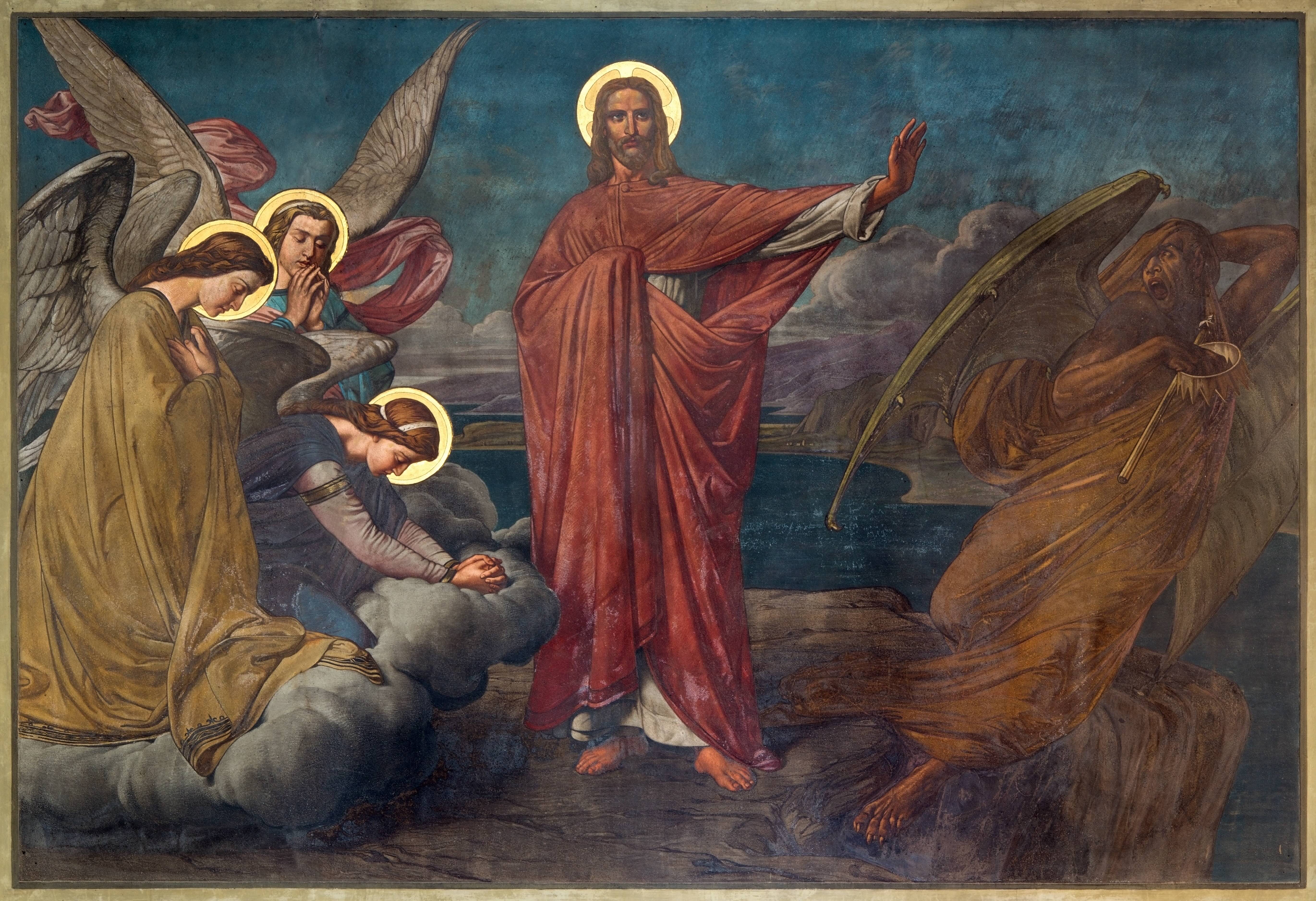
All three synoptic Gospels record the account of Jesus’ temptations in the wilderness. Let’s look at Matthew’s record since it alone refers to Satan as the tempter, although Mark and Luke are clear that it is the evil one tempting Jesus during this encounter.
Matthew 4:1-11 reads:
Continue readingThen Jesus was led up by the Spirit into the wilderness to be tempted by the devil. After he had fasted forty days and forty nights, he was hungry. Then the tempter approached him and said, “If you are the Son of God, tell these stones to become bread.”
He answered, “It is written: Man must not live on bread alone but on every word that comes from the mouth of God.”
Then the devil took him to the holy city, had him stand on the pinnacle of the temple, and said to him, “If you are the Son of God, throw yourself down. For it is written: He will give his angels orders concerning you, and they will support you with their hands so that you will not strike your foot against a stone.”
Jesus told him, “It is also written: Do not test the Lord your God.”
Again, the devil took him to a very high mountain and showed him all the kingdoms of the world and their splendor. And he said to him, “I will give you all these things if you will fall down and worship me.”
Then Jesus told him, “Go away, Satan! For it is written: Worship the Lord your God, and serve only him.”
Then the devil left him, and angels came and began to serve him (emphasis added).
 OnceDelivered.net