Answering objections to Scripture

Christians often find it difficult to have meaningful conversations with people struggling with same-sex attraction. To a great extent, that’s our own fault for delivering biblical truth with a sledge hammer rather than with gentleness and respect (1 Peter 3:15-16).

Even so, it’s hard to carry on a civil discourse when you’re accused of being a homophobe engaging in hate speech. What’s more, some LGBT supporters express such hostility toward Christians that they won’t listen to a biblical approach to the issue, no matter how faithfully and lovingly delivered.

So, what should we do? Donald T. Williams suggests the Socratic method. Socrates is an ancient philosopher who taught by asking questions. Jesus proved to be the consummate practitioner of this method, plying His questions with divine love and remarkable insight.

In a recent Christian Research Journal article, Williams writes, “Well-designed Socratic questions can help to defuse tense encounters and also give nonbelievers the opportunity to encounter a different view without rejecting it outright before they even hear it.”
Continue reading

What is the sin of Sodom?

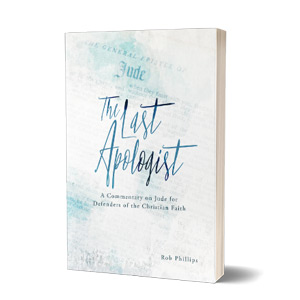
The Missouri Baptist Convention has published a new resource called The Last Apologist: A Commentary on Jude for Defenders of the Christian Faith. The 275-page book is available in print and Kindle editions on Amazon, and in print from the MBC. But we also want to make each of the 16 chapters available online. This post features the last portion of Chapter 7: The Lessons of History: Remembering the Past to Defend the Faith.

Previously: Part 1 of Chapter 7

_______________

In the same way, Sodom and Gomorrah and the cities around them committed sexual immorality and practiced perversions, just as they did, and serve as an example by undergoing the punishment of eternal fire. (Jude 7)

In this, the third lesson from history in verses 5-7, Jude completes the illustration of the progressive nature of sin: unbelief leads to rebellion, which ultimately gives way to depravity. Perhaps no place in history is more readily identified with debauched behavior than Sodom (not to neglect its nasty neighbor, Gomorrah, or the surrounding communities). From the red-light district of De Wallen in Amsterdam to the Strip in Las Vegas, no modern-day place on earth holds a candle to the ancient flesh pot on the plains of Canaan.

Before the destruction of these cities, Moses favorably describes the area as fertile – a good place to raise crops and animals (Gen. 13:10). But God’s wrath against the sinful inhabitants is so severe that the cities are reduced to ashes. In fact, God’s judgment is so complete that the ruins remain undiscovered, and the cities’ precise location is yet in doubt. It’s possible, but not proven, that the ruins lie beneath what is now the mineral-dense water in the southern portion of the Dead Sea.

The Lord’s judgment not only buries the bodies of the wicked beneath the ashes; it plunges their souls into everlasting punishment – in part, as a dire warning to future generations that unrepentant depravity leads to an unmitigated divine response. Jude wishes to remind his readers that the false teachers who have infiltrated the church possess the same depraved nature as the Sodomites and will share the same fate – everlasting punishment in hell.

But what, exactly, is the sin of Sodom and Gomorrah? Jude seems quite clear that they engage in sexual immorality and practice perversions – particularly homosexuality. Yet some recent commentators argue that the Sodomites, though a salty bunch, are falsely accused and badly misunderstood.
Continue reading

Why hell is forever

The doctrine of hell is disturbing. The very idea of suffering and separation beyond the grave elicits a wide range of responses, from anguish to anger.

The possibility of departed loved ones languishing in outer darkness only adds to the grief of those laying flowers on their graves.

Some atheists cite hell as a reason to deny the existence of a loving God.

What’s more, Anglican cleric John Stott, who wrote the influential book Basic Christianity, found the idea of eternal suffering in hell so repugnant that he rejected it in favor of annihilationism.

According to a 2014 survey by LifeWay Research, fewer Mainline Protestants believe in hell than do Americans in general (55 percent vs. 61 percent, respectively).

And for many evangelicals, hell remains an inconvenient truth.
Continue reading

The Lessons of History: Remembering the Past to Defend the Faith

The Missouri Baptist Convention has published a new resource called The Last Apologist: A Commentary on Jude for Defenders of the Christian Faith. The 275-page book is available in print and Kindle editions on Amazon, and in print from the MBC. But we also want to make each of the 16 chapters available online. This post features the first half of Chapter 7: The Lessons of History: Remembering the Past to Defend the Faith

Previously: Jude and his divine half-brother

_______________

.

Now I want to remind you, though you know all these things: the Lord, having first of all saved a people out of Egypt, later destroyed those who did not believe; and He has kept, with eternal chains in darkness for the judgment of the great day, angels who did not keep their own position but deserted their proper dwelling. In the same way, Sodom and Gomorrah and the cities around them committed sexual immorality and practiced perversions, just as they did, and serve as an example by undergoing the punishment of eternal fire. (Jude 5-7)

In The Life of Reason, Vol. 1 (1905-06), George Santayana famously wrote, “Those who cannot remember the past are condemned to repeat it.” Many others have fashioned their own versions of this quip to make the point that our past does not have to determine our future – as long as we’re careful to learn the lessons of history.

Not everyone agrees. Author Kurt Vonnegut once offered this pithy response, “I’ve got news for Mr. Santayana: we’re doomed to repeat the past no matter what. That’s what it is to be alive.”

Both men have a point. Santayana implores us to learn from past mistakes, while Vonnegut reminds us that the depths of human depravity virtually guarantee that, if given the chance, we’ll repeat the same bad choices.

The Bible speaks to both sides of the issue. God and His servants often instruct us in Scripture to remember. Moses tells the Israelites to remember their slavery in Egypt, and God’s mighty deliverance with a strong hand and an outstretched arm (Deut. 5:15). Jesus instructs the apostles to observe the Lord’s Supper – particularly the symbolism of the bread and cup – in remembrance of Him (Luke 22:19). And in visiting the church at Ephesus – a hard-working congregation whose members have cooled in their passion for Christ – Jesus urges them to remember how far they have fallen (Rev. 2:5).

Other passages could be cited, but the point remains that remembering the goodness of God, and rehearsing the acts of obedience He has given us to honor Him, lead to blessings, while neglecting the things of God invariably results in a downward spiral of sinful patterns.
Continue reading

Jude and his divine half-brother

The Missouri Baptist Convention has published a new resource called The Last Apologist: A Commentary on Jude for Defenders of the Christian Faith. The 275-page book is available in print and Kindle editions on Amazon, and in print from the MBC. But we also want to make each of the 16 chapters available online. This post features the last portion of Chapter 6: Who Are Those Guys? How Apologists Identify False Teachers.

Previously: Who Are Those Guys? How to Identify False Teachers.

_______________


For certain men, who were designated for this judgment long ago, have come in by stealth; they are ungodly, turning the grace of our God into promiscuity and denying our only Master and Lord, Jesus Christ. (Jude 4)

A doctrinal gem often overlooked in Jude is a reference to the deity of Christ. In verse 4, Jude describes “certain men” who are guilty of “denying our Master and Lord, Jesus Christ.” Immediately after this warning, he offers examples from Jewish history, beginning with the rebellion of the Israelites in the wilderness: “Now I want to remind you, though you know all these things: the Lord, having first of all saved a people out of Egypt, later destroyed those who did not believe” (v. 5).

Note that Jude calls Jesus “Lord” in verse 4, and then he refers to the “Lord” of the Israelites in the very next verse. The Lord who delivered the Israelites out of Egypt and then destroyed the apostates can be none other than the Lord Jesus.

In fact, many of the earliest manuscripts of Jude actually say “Jesus” instead of “the Lord” in verse 5, and this is most likely the original meaning. Several modern translations, including the New Living Translation (NLT), English Standard Version (ESV), and the NET Bible all refer to “Jesus” rather than “the Lord” in this passage.
Continue reading
