Behold, the Bridegroom Comes!

This is the 18th in a series of excerpts from What Every Christian Should Know About the Return of Jesus, released by High Street Press and available at Amazon.com


There are well over a hundred parables in the Bible, but the most beloved are the 30-plus parables Jesus shares with us. While he’s not the first to use this form of teaching, Jesus endows his parables with unparalleled originality and spiritual depth. In fact, more than one-third of all his recorded sayings are parables.

Several of Jesus’ parables address the suddenness of his future return in glory. One of these is the parable of the 10 virgins in Matthew 25:1-13.

The central theme of this parable is readiness for the return of Christ. Like the bridegroom in first-century Galilean society, Jesus most assuredly is coming, but he’s coming suddenly and catches the unprepared by surprise.

The central character in this parable is the bridegroom (Christ), who is delayed in coming for his bride (the church). Scripture often refers to the church as the bride and Christ as the bridegroom (Matt. 9:15; Mark 2:19-20; Luke 5:34-35; John 3:29).    Believers are “betrothed” to Jesus, who promises to come one day and take them to his Father’s house (John 14:1-3).

A general understanding of first-century Jewish wedding customs is helpful in navigating this parable. 

Continue reading

Guarded from the Evil One

The following excerpt is taken from What Every Christian Should Know About Satan. Order your copy in print, Kindle, or Audible versions here.


Paul writes in 2 Thessalonians 3:3: “But the Lord is faithful; he will strengthen you and guard you from the evil one.”

Paul begins chapter 3 of his second letter to the Thessalonians with an appeal for prayer “that the word of the Lord may spread rapidly and be honored, just as it was with you” (v. 1). In addition, Paul asks his readers to pray that he and his companions be delivered from “wicked and evil people, for not all have faith” (v. 2). 

Paul uses two adjectives to describe those attacking his ministry. “Wicked” is from the Greek atopos and means “out of place,” “improper,” “wrong-headed,” or “perverse.” These people behave in ways unbecoming of Christians. The second word Paul uses, “evil,” is from the Greek poneros, which we already addressed in this chapter as a term meaning “bad,” “evil,” or “malicious.” 

Paul seems to have a particular group in mind, perhaps Jewish opponents of the gospel in Corinth (Acts 18:6ff). In any case, these wicked people do not appear to be Christians, for Paul follows his description of them with the phrase, “for not all have faith” (2 Thess. 3:2). That is, these opponents refuse to embrace the objective truths of the gospel message.

Continue reading

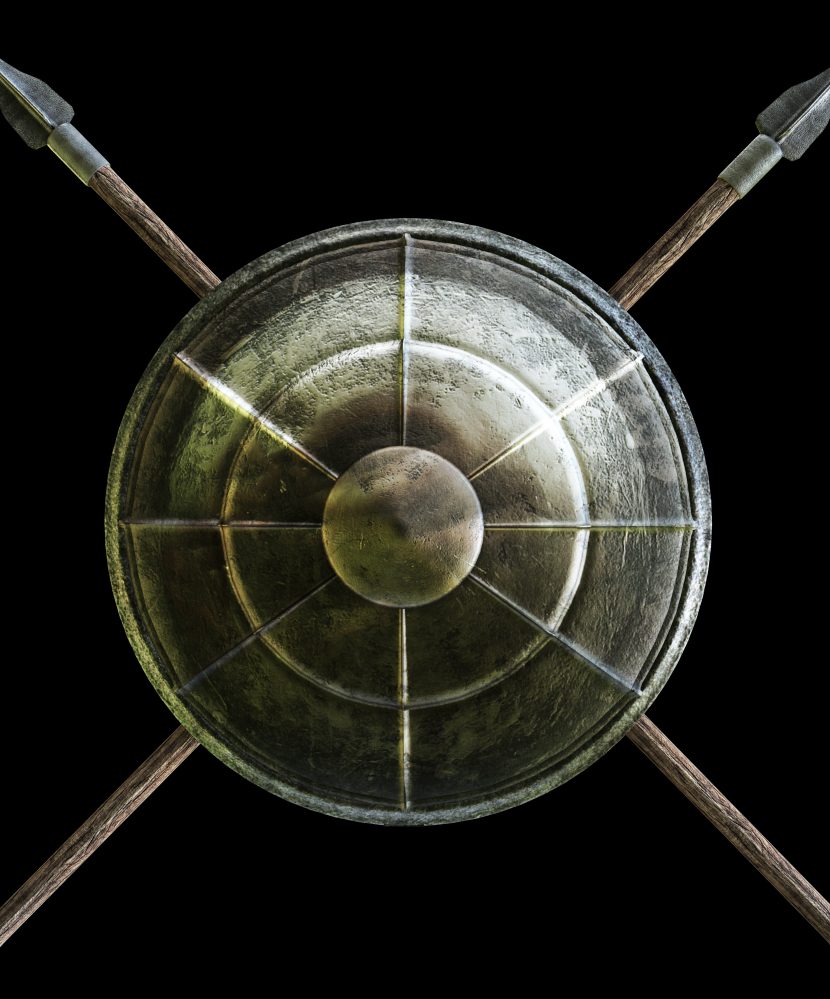
Take Up the Shield of Faith

The following excerpt is taken from What Every Christian Should Know About Satan. Order your copy in print, Kindle, or Audible versions here.


Paul writes to the Ephesians: “In every situation take up the shield of faith with which you can extinguish all the flaming arrows of the evil one” (Eph. 6:16) 

We explore this passage more fully in chapter 15 of What Every Christian Should Know about Satan. However, a few observations here may prove helpful. 

First, the evil one wields a quiver full of “flaming arrows.” In New Testament times, soldiers often covered the tips of their arrows in coarse fibers dipped in pitch and then set on fire. These flaming arrows were shot at different trajectories toward enemy lines, presenting the double threat of piercing iron and scattering flames. 

In a similar way, Satan hurls a seemingly endless volley of temptations at us: thoughts of pride, selfishness, fear, doubt, disappointment, greed, anger, vengeance, lust, and judgmentalism. They strike at different times and in different ways, but they all are deadly in their intent. 

Continue reading

Protect Them from the Evil One

The following excerpt is taken from What Every Christian Should Know About Satan. Order your copy in print, Kindle, or Audible versions here.


In Jesus’ high-priestly prayer, he tells the Father: “I am not praying that you take them out of the world but that you protect them from the evil one” (John 17:5).

John 17 features the longest-recorded prayer of Jesus in the Gospels. This comes after Jesus delivers final instructions to his disciples and before he is betrayed, arrested, and crucified. First, Jesus prays for himself (vv. 1-5), then for his disciples (vv. 6-19), and finally for all believers (vv. 20-26). This intercessory prayer is best known as Jesus’ high priestly prayer.

Jesus confirms he has finished his heaven-sent task with the disciples. He has revealed the Father’s name – that is, the very presence of God – to them (v. 6; cf. John 14:9). He has spoken to them the Father’s words (v. 8). And he has ensured that they received the words, understood them, and believed the Father sent Jesus (v. 8). 

Continue reading

His Name is Called the Word of God

This is the 17th in a series of excerpts from What Every Christian Should Know About the Return of Jesus, released by High Street Press and available at Amazon.com


In the previous column, we examined key features of the returning Christ that John reveals in Revelation 19:11-16. Now, we complete our review. 

7. His name is called the Word of God. 

In his Gospel account, John tells us of the person and work of Jesus as the Incarnate Word (John 1:1-18). He is eternal, divine, distinct from the Father and yet equal with him. He is the creator of everything. He added sinless humanity to his deity in the Incarnation and thus pitched his tent with sinful and fallen people. Though rejected by his own, he is the true source of light and life. And to those who trust in him, he grants the right to be God’s adopted children. He is God revealed in human flesh. 

And now, in Revelation 19, the Word of God again appears – not to create, suffer, or die, but to gloriously claim the prize he won through his sinless life and sacrificial death on the cross. He comes for us – the redeemed he has purchased with his own blood. He reverses the curse that Adam’s sin wrought on mankind and his environment. He judges the wicked, casts them out, purges the physical realm of sin and its stain, and creates new heavens and a new earth. Put simply, the Word restores Eden.

Continue reading