Should you believe in ghosts?

BeingsThis is the last in a series of columns on the afterlife and the unseen realm.

Ghosts are everywhere. They star in major motion pictures from The Shining to Scary Movie 2. Some ghosts are friendly (Casper) and some are frightening (Bloody Mary).

Popular television shows like Ghost Adventures use the latest technologies to “prove” that spirits of the dead are all around us – and want to make their presence known.

But is this true? The short answer is no. As Christians, we must gauge all truth claims by the Bible, the ultimate and unchanging measure of reality.
Continue reading

The sea no longer existed – Revelation 21:1

TsunamiPreviously: A new heaven and a new earth – Revelation 21:1-8

The scripture

Rev. 21:1 – Then I saw a new heaven and a new earth, for the first heaven and the first earth had passed away, and the sea no longer existed. (HCSB)

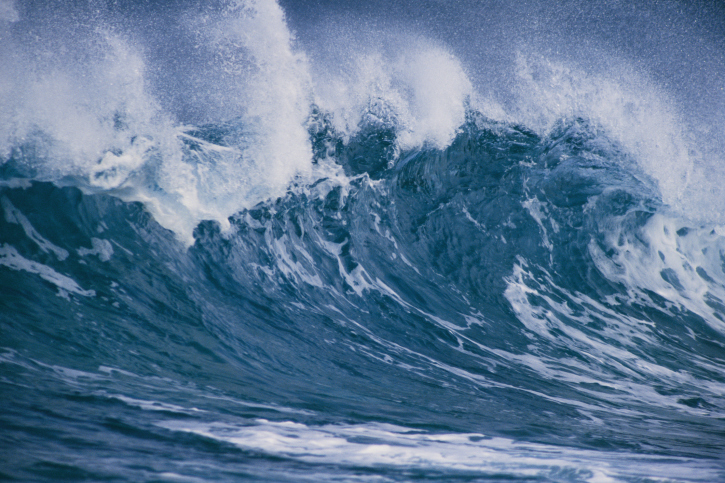
The sea no longer existed

It’s curious that John notes there is no longer any sea (Rev. 21:1). Why is this?

John may be saying that just as the old heaven and earth have passed away, so has the old sea, which covers most of our planet. Many of God’s creatures reside in the sea or rely on it for life. So why wouldn’t Jesus renovate these huge bodies of water and their inhabitants? Some commentators take John’s words to mean the oceans are done away with, not fresh bodies of water.

Still others take this symbolically as representing the nations and peoples of the Gentiles. Only spiritual Israel – that is, true Israel consisting of Old and New Covenant saints – remains, while unbelievers are cast out, allowing the glory of the Lord to fill the earth: “For the earth will be filled with the knowledge of the Lord’s glory, as the waters cover the sea” (Hab. 2:14).

A.R. Fausset and D. Brown offer this perspective: “The sea is the type of perpetual unrest. Hence our Lord rebukes it as an unruly hostile troubler of His people. It symbolized the political tumults out of which ‘the beast’ arose, Rev 13:1. As the physical corresponds to the spiritual and moral world, so the absence of sea, after the metamorphosis of the earth by fire, answers to the unruffled state of solid peace which shall then prevail…. The sea was once the element of the world’s destruction, and is still the source of death to thousands, whence after the millennium, at the general judgment, it is specially said, ‘The sea gave up the dead … in it.’ Then it shall cease to destroy, or disturb, being removed altogether on account of its past destructions” (Commentary Critical and Explanatory on the Whole Bible, Rev. 21:1, Logos Research Systems).
Continue reading

Is heaven our final home? (Part 2)

This is the ninth in a series of articles on biblical terms that describe the afterlife and the unseen world.

In the previous column we saw how Scripture describes heaven as the intermediate state between death and resurrection for followers of Jesus as they await future resurrection and glorification. Now, we look in more detail at heaven as well as the new heavens and new earth.

What about heaven?

The New Testament reveals many truths about this intermediate state for followers of Jesus. Here are 12:

(1) The Father, Son, and Holy Spirit reside in heaven, yet they have immediate access to earth (Matt. 3:16-17).

(2) God’s will is done completely in heaven – and one day will be done on earth (Matt. 6:9-10).

(3) Angels surround the throne in heaven (Matt. 18:10), as do majestic heavenly creatures and redeemed people (Revelation 4-5).

(4) The heavenly throne is the heart of God’s authority and majesty (Mark 16:19).

(5) Heaven is the place from which Satan fell and has no future part (Luke 10:18; Rev. 20:10).

(6) Heaven is where believers’ names are written down, providing assurance of everlasting life (Luke 10:20; Heb. 12:23).
Continue reading

A new heaven and a new earth: Revelation 21:1-8

200321147-001Previously: Anyone not found in the book of life – Revelation 20:15

The scripture

Rev. 21:1 – Then I saw a new heaven and a new earth, for the first heaven and the first earth had passed away, and the sea no longer existed. 2 I also saw the Holy City, new Jerusalem, coming down out of heaven from God, prepared like a bride adorned for her husband. 3 Then I heard a loud voice from the throne: Look! God’s dwelling is with humanity, and He will live with them. They will be His people, and God Himself will be with them and be their God. 4 He will wipe away every tear from their eyes. Death will no longer exist; grief, crying, and pain will exist no longer, because the previous things have passed away.

     5 Then the One seated on the throne said, “Look! I am making everything new.” He also said, “Write, because these words are faithful and true.” 6 And He said to me, “It is done! I am the Alpha and the Omega, the Beginning and the End. I will give water as a gift to the thirsty from the spring of life. 7 The victor will inherit these things, and I will be his God, and he will be My son. 8 But the cowards, unbelievers, vile, murderers, sexually immoral, sorcerers, idolaters, and all liars – their share will be in the lake that burns with fire and sulfur, which is the second death.” (HCSB)

A brief summary

Verses 1-8 appear to offer us a brief summary of what is described in more detail in the remainder of chapters 21-22. John sees a new heaven, a new earth, and a new Jerusalem. The Greek word John uses for “new” is kainos, which means “different from the usual, impressive, better than the old, superior in value or attraction,” according to the Theological Dictionary of the New Testament. In other words, God does not simply annihilate the old order of things and start again from scratch; He purges the sinful and fallen cosmos and restores it to its pristine beauty.

Steve Gregg explains in Revelation: Four Views, “One way of understanding the structure of these final chapters is to see this whole segment (vv. 1-8) as an outline or summary of the remaining portion of the book. A remarkable correspondence exists between the progression of thought in these first verses and in the remaining chapters” (p. 492).

For example:

  • In verse 2 we see the New Jerusalem, explained more fully in Rev. 21:9-21.
  • In verse 3 we see that God dwells among men, described in more detail in Rev. 21:22-27.
  • In verse 5 we see the renewal of the world, for which we are provided more information in Rev. 22:1-5.
  • In verse 5 we also see, “These words are faithful and true,” which is expanded upon in Rev. 22:6-10.
  • In verse 6 we see Jesus declare His work completed, “It is done! I am the Alpha and the Omega,” more fully revealed in Rev. 22:11-15.
  • In verses 6-7 we see a final blessing, the water of life to all who thirst, expanded upon in Rev. 22:16-17.
  • And in verse 8 we see the final curse upon the rebellious, repeated in Rev. 22:18-19.

Continue reading

Is heaven our final home?


This is the eighth in a series of articles on biblical terms that describe the afterlife and the unseen world.
Is heaven the final destination of all who rest in Jesus? Or do we spend eternity someplace else?

In 2 Corinthians 5, the apostle Paul describes two different and mutually exclusive states of existence for the Christian. While we are on earth, “at home in the body,” we are “away from the Lord.” And when we are “out of the body” we are “at home with the Lord” (5:6, 8).

The New Testament teaches that upon death, believers’ souls/spirits separate from our lifeless bodies and enter the presence of God in heaven (see also Phil. 1:21-24). There, we enjoy intimate fellowship with our Lord while awaiting the future resurrection and glorification of our bodies (John 5:28-29; 1 Cor. 15:51-58; 1 Thess. 4:13-18).

We see magnificent glimpses into the throne room of heaven through the visionary eyes of the apostle John in the Book of Revelation: the triune Godhead; an emerald-colored rainbow surrounding a glorious throne; living creatures; elders; angels; and redeemed people from every tribe, language, people, and nation.

The combined voices of all creatures in heaven, on earth, under the earth, and in the sea proclaim, “Blessing and honor and glory and dominion to the One seated on the throne, and to the Lamb, forever and ever!” (Rev. 5:13).

We may be tempted to stop here, as if heaven is the final destination in life’s long journey. It is breathtaking. But it gets better.
Continue reading