
Category: The Last Apologist (book)

The Lessons of History: Remembering the Past to Defend the Faith
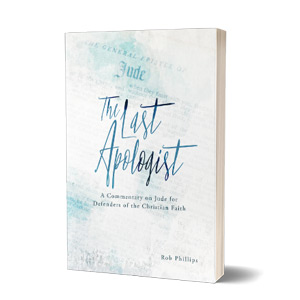 The Missouri Baptist Convention has published a new resource called The Last Apologist: A Commentary on Jude for Defenders of the Christian Faith. The 275-page book is available in print and Kindle editions on Amazon, and in print from the MBC. But we also want to make each of the 16 chapters available online. This post features the first half of Chapter 7: The Lessons of History: Remembering the Past to Defend the Faith
Previously: Jude and his divine half-brother
_______________
.
Now I want to remind you, though you know all these things: the Lord, having first of all saved a people out of Egypt, later destroyed those who did not believe; and He has kept, with eternal chains in darkness for the judgment of the great day, angels who did not keep their own position but deserted their proper dwelling. In the same way, Sodom and Gomorrah and the cities around them committed sexual immorality and practiced perversions, just as they did, and serve as an example by undergoing the punishment of eternal fire. (Jude 5-7)
In The Life of Reason, Vol. 1 (1905-06), George Santayana famously wrote, “Those who cannot remember the past are condemned to repeat it.” Many others have fashioned their own versions of this quip to make the point that our past does not have to determine our future – as long as we’re careful to learn the lessons of history.
Not everyone agrees. Author Kurt Vonnegut once offered this pithy response, “I’ve got news for Mr. Santayana: we’re doomed to repeat the past no matter what. That’s what it is to be alive.”
Both men have a point. Santayana implores us to learn from past mistakes, while Vonnegut reminds us that the depths of human depravity virtually guarantee that, if given the chance, we’ll repeat the same bad choices.
The Bible speaks to both sides of the issue. God and His servants often instruct us in Scripture to remember. Moses tells the Israelites to remember their slavery in Egypt, and God’s mighty deliverance with a strong hand and an outstretched arm (Deut. 5:15). Jesus instructs the apostles to observe the Lord’s Supper – particularly the symbolism of the bread and cup – in remembrance of Him (Luke 22:19). And in visiting the church at Ephesus – a hard-working congregation whose members have cooled in their passion for Christ – Jesus urges them to remember how far they have fallen (Rev. 2:5).
Other passages could be cited, but the point remains that remembering the goodness of God, and rehearsing the acts of obedience He has given us to honor Him, lead to blessings, while neglecting the things of God invariably results in a downward spiral of sinful patterns.
Continue reading
Jude and his divine half-brother
 The Missouri Baptist Convention has published a new resource called The Last Apologist: A Commentary on Jude for Defenders of the Christian Faith. The 275-page book is available in print and Kindle editions on Amazon, and in print from the MBC. But we also want to make each of the 16 chapters available online. This post features the last portion of Chapter 6: Who Are Those Guys? How Apologists Identify False Teachers.
Previously: Who Are Those Guys? How to Identify False Teachers.
_______________
For certain men, who were designated for this judgment long ago, have come in by stealth; they are ungodly, turning the grace of our God into promiscuity and denying our only Master and Lord, Jesus Christ. (Jude 4)
A doctrinal gem often overlooked in Jude is a reference to the deity of Christ. In verse 4, Jude describes “certain men” who are guilty of “denying our Master and Lord, Jesus Christ.” Immediately after this warning, he offers examples from Jewish history, beginning with the rebellion of the Israelites in the wilderness: “Now I want to remind you, though you know all these things: the Lord, having first of all saved a people out of Egypt, later destroyed those who did not believe” (v. 5).
Note that Jude calls Jesus “Lord” in verse 4, and then he refers to the “Lord” of the Israelites in the very next verse. The Lord who delivered the Israelites out of Egypt and then destroyed the apostates can be none other than the Lord Jesus.
In fact, many of the earliest manuscripts of Jude actually say “Jesus” instead of “the Lord” in verse 5, and this is most likely the original meaning. Several modern translations, including the New Living Translation (NLT), English Standard Version (ESV), and the NET Bible all refer to “Jesus” rather than “the Lord” in this passage.
Continue reading
Who Are Those Guys? How to Identify False Teachers
The Missouri Baptist Convention has published a new resource called The Last Apologist: A Commentary on Jude for Defenders of the Christian Faith. The 275-page book is available in print and Kindle editions on Amazon, and in print from the MBC. But we also want to make each of the 16 chapters available online. This post features the first half of Chapter 6: Who Are Those Guys? How to Identify False Teachers.
Previously: The last half of Chapter 5: Why Is Contending for the Faith Necessary?
_______________
For certain men, who were designated for this judgment long ago, have come in by stealth; they are ungodly, turning the grace of our God into promiscuity and denying our only Master and Lord, Jesus Christ. (Jude 4)
In the 1969 film Butch Cassidy and the Sundance Kid, a relentless posse interrupts the legendary duo’s run of train robberies. Fleeing across rivers, plains, and rocky outcroppings, Butch and Sundance engage in playful, but increasingly annoyed, banter about the skilled men tracking them. At one point, Butch tries to assure Sundance that their escape tactics are working. Sundance is not convinced and keeps looking back over his shoulder.
“Ah, you’re wasting your time,” says Butch. “They can’t track us over rocks.”
“Tell them that,” Sundance replies, nodding toward the horizon.
Butch looks for himself and sees that the trackers indeed are still hot on their trail. “They’re beginning to get on my nerves,” he says. “Who are those guys?”
Who indeed. “Who are those guys?” becomes a running gag line throughout the film.
Butch and Sundance eventually discover their pursuers’ names, as well as the identity of the railroad executive bankrolling the posse. The news forces them to flee to South America, where they revive their nefarious careers before meeting a bloody end.
Like Butch and Sundance, Jude can’t seem to shake the posse on his trail. Rather than pistol-packing bounty hunters, however, these are false teachers doggedly determined to bring down the infant church. Jude avoids calling them by name, choosing instead to describe them as “certain/some men” (HCSB, NIV, KJV), “certain people” (ESV), or “certain persons” (NASB). In a parallel passage, Peter simply refers to them as “false teachers” (2 Peter 2:1).
Continue reading
Why is Contending for the Faith Necessary?
The Missouri Baptist Convention has published a new resource called The Last Apologist: A Commentary on Jude for Defenders of the Christian Faith. The 275-page book is available in print and Kindle editions on Amazon, and in print from the MBC. But we also want to make each of the 16 chapters available online. This post features the last portion of Chapter 5: I Found it Necessary: Going from Good to Better in Defense of the Faith.
Previously: Chapter 5: I Found It Necessary: Going from Good to Better in Defense of the Faith
_______________
Dear friends, although I was eager to write you about our common salvation, I found it necessary to write and exhort you to contend for the faith that was delivered to the saints once for all. (Jude 3)
Jude expresses great concern with these words: “I found it necessary to write and exhort you to contend for the faith that was delivered to the saints once for all” (v. 3b). He places on hold his plans to write about the common salvation grounded in the person and work of Christ in order to address an urgent matter. “Circumstances had arisen that demanded immediate action, thus presenting an emergency situation. Jude addressed himself to a recognized problem, and exhorted the believers to respond with positive determination.”
The Greek word translated “necessary” is anagke and means by constraint, compulsion, distress, or hardship. In other New Testament passages, the term is used to describe the influence of other persons, circumstances, or a sense of obligation or duty.
For example, in urging the Corinthians to share their financial resources, Paul writes, “Each person should do as he has decided in his heart – not out of regret or out of necessity, for God loves a cheerful giver” (2 Cor. 9:7 – emphasis added). In his appeal to Philemon to welcome back a runaway slave, Paul remarks, “But I didn’t want to do anything without your consent, so that your good deed might not be out of obligation, but of your own free will” (Philemon 14 – emphasis added).
The writer of Hebrews addresses his audience with an appeal to consider the superiority of the new covenant ministry in Christ. About the law’s requirements for the shedding of blood, he writes, “Therefore it was necessary for the copies of the things in the heavens to be purified with these sacrifices, but the heavenly things themselves to be purified with better sacrifices than these” (Heb. 9:23 – emphasis added).
And in regard to a Christian’s duties to the state, Paul remarks, “Therefore, you must submit, not only because of wrath, but also because of your conscience” (Rom. 13:5 – emphasis added).
For Jude, the necessity to write an urgent exhortation comes not from peer pressure or an obligation to fleshly authority. Rather, it appears the Holy Spirit has stirred Jude’s heart and caused him to grieve over the manner in which his beloved friends are allowing false teachings to seep into the church. They must not sit idly by while interlopers undermine the first-order doctrines established by the eyewitnesses of the life of Christ.
Warren Wiersbe comments, “I must confess that I sympathize with Jude. In my own ministry, I would much rather encourage the saints than declare war on the apostates. But when the enemy is in the field, the watchmen dare not go to sleep. The Christian life is a battleground, not a playground.”
Continue reading
I Found It Necessary: Going from Good to Better in Defense of the Faith
The Missouri Baptist Convention has published a new resource called The Last Apologist: A Commentary on Jude for Defenders of the Christian Faith. The 275-page book is available in print and Kindle editions on Amazon, and in print from the MBC. But we also want to make each of the 16 chapters available online. This post features the first part of Chapter 5: I Found It Necessary: Going from Good to Better in Defense of the Faith.
Previously: Chapter 4: Copycats? The apologist’s challenge concerning Jude and 2 Peter 2
_______________
Dear friends, although I was eager to write you about our common salvation, I found it necessary to write and exhort you to contend for the faith that was delivered to the saints once for all. (Jude 3)
It’s Christmas night 1776, and General George Washington’s Continental Army could use some rest. Tired, cold, and harried, the soldiers would welcome a blazing fire, a warm meal, and a good night’s sleep as a holiday respite from their travails.
But instead, Washington leads 2,400 troops across the icy Delaware River, where they stun German Hessian mercenaries garrisoned at Trenton, New Jersey. The Patriot forces catch the British-sponsored enemy completely off guard. “The lasting effect was that the success raised rebel morale and proved that the most professional army in the West could be beaten.”
Some 17 centuries earlier, Jude ponders a good thing for the harried believers besieged by false teachers. Evidently, he has given much thought to writing about their common salvation, but the Holy Spirit prompts him to take a more aggressive tack and spur his fellow believers to engage in a doctrinal battle that influences the course of the early church.
Jude demonstrates a sensitivity to the Holy Spirit, and a willingness to turn from something good to something better in defense of the Christian faith.
Continue reading
 OnceDelivered.net