
Category: Satan

Two Questions about Hell

The following excerpt is taken from What Every Christian Should Know About Satan. Order your copy in print, Kindle, or Audible versions here.
When we consider the final destiny of Satan, demons, and the unrepentant wicked, at least two questions often arise. In this post, we briefly address both of them: Is hellfire literal? And, Is hell forever?
Is hellfire literal?
We might ask: When Jesus and the New Testament writers depict hell, are we to take the lake of fire literally or figuratively? Godly scholars stand on both sides of the debate. Charles Spurgeon, for example, spoke of hell’s fire as real:
Continue readingNow, do not begin telling me that that is metaphorical fire: who cares for that? If a man were to threaten to give me a metaphorical blow on the head, I should care very little about it; he would be welcome to give me as many as he pleased. And what say the wicked? “We do not care about metaphorical fires.” But they are real, sir – yes, as real as yourself. There is a real fire in hell, as truly as you have now a real body – a fire exactly like that which we have on earth in everything except this – that it will not consume, though it will torture you. You have seen the asbestos lying in the fire red hot, but when you take it out it is unconsumed. So your body will be prepared by God in such a way that it will burn forever without being consumed; it will lie, not as you consider, in metaphorical fire, but in actual flame.
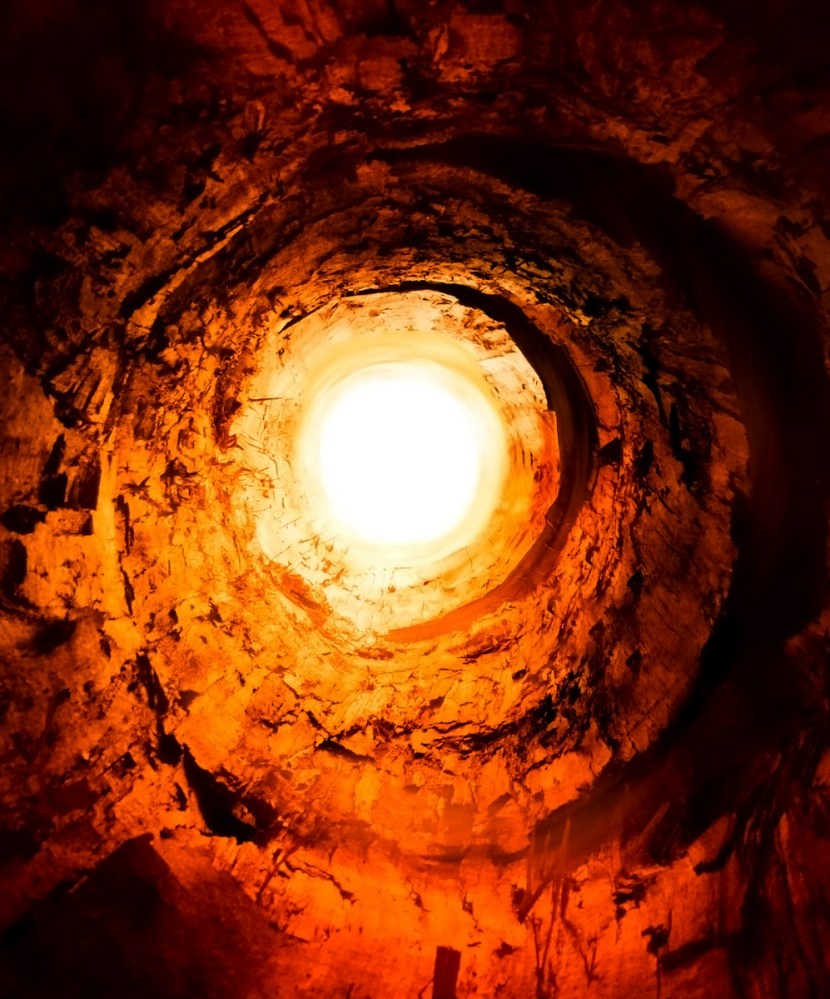
The Lake of Fire and Sulfur

The following excerpt is taken from What Every Christian Should Know About Satan. Order your copy in print, Kindle, or Audible versions here.
Revelation 20:10 reads: “The devil who deceived them was thrown into the lake of fire and sulfur where the beast and the false prophet are, and they will be tormented day and night forever and ever.”
In this verse, John describes Satan’s ultimate destination as “the lake of fire and sulfur.” In Matthew 25:41, Jesus calls it “the eternal fire prepared for the devil and his angels.” Jesus and the New Testament writers also describe this place as “outer darkness,” “eternal punishment,” and “the second death.” But there is an even more descriptive term for this place: gehenna, or hell.
While the Hebrew sheol and the Greek hades generally depict the temporary abode of the dead, gehenna and its associated terms describe a place of everlasting future punishment, not only for Satan and evil spirits, but also for those whose names are not written in the book of life (Rev. 20:15).
Continue reading
The Millennium

The following excerpt is taken from What Every Christian Should Know About Satan. Order your copy in print, Kindle, or Audible versions here.
If the abyss is a real but temporary place in which Satan is bound, we might also ask whether the thousand-year period of his imprisonment should be understood literally or figuratively. The thousand years, or millennium, of Revelation 20 is a much-debated period of time. There are at least four major views:
Historic premillennialists believe the church will endure a period of tribulation before Christ returns to resurrect his church and reign on earth for a thousand years. This view is called “historic” because some early church fathers, such as Justin Martyr and Irenaeus, embraced it. For our purposes, it’s important to note that Satan is seen as bound at the beginning of the millennium and released for a short time at the end of it, before being cast into the lake of fire (Rev. 20:7-10). So, Satan’s binding is future.
Dispensationalists also argue for a thousand-year reign of Christ on earth. Before this occurs, however, Christ resurrects and snatches away his church in an event known as the rapture. This sets off seven years of tribulation on earth, with Satan working through his primary human agents, the antichrist and false prophet, to foment great persecution of Jews and Gentiles who come to faith in Christ. At the end of the tribulation, Christ returns and binds Satan for a thousand years, releasing him briefly at the end before casting him into the lake of fire. As in historic premillennialism, Satan’s binding is future.
Continue reading The Abyss
The following excerpt is taken from What Every Christian Should Know About Satan. Order your copy in print, Kindle, or Audible versions here.
Before Satan is cast into the lake of fire to be tormented forever, Revelation 20:1-3 details a thousand-year imprisonment:
Then I saw an angel coming down from heaven holding the key to the abyss and a great chain in his hand. He seized the dragon, that ancient serpent who is the devil and Satan, and bound him for a thousand years. He threw him into the abyss, closed it, and put a seal on it so that he would no longer deceive the nations until the thousand years were completed. After that, he must be released for a short time.
The Greek word abyssos, rendered “abyss,” “pit,” or “bottomless pit” in many English translations, occurs nine times in the New Testament. In most occurrences, it refers to a place of temporary confinement for certain evil spirits. For example, in Jesus’ encounter with “Legion,” the demons who possess this Gerasene man beg Jesus not to banish them to the abyss – no doubt a place evil spirits fear (Luke 8:31).
Continue reading Why Is Hell Eternal?
The following excerpt is taken from What Every Christian Should Know About Satan. Order your copy in print, Kindle, or Audible versions here.
We should clarify that only God is truly eternal. That is, only the uncreated Father, Son, and Holy Spirit share the unique attribute of being without beginning or end. So, when we look at passages like Matthew 25:41, in what sense are we to understand the final destinies of the sheep, goats, Satan, and evil spirits as eternal?
The Greek word rendered “eternal” in this passage is aionios, which generally means “without beginning or end, that which always has been and always will be.” In some contexts, aionios may be rendered “without beginning” or “without end, never to cease, everlasting.” R. T. France, in his commentary on Matthew, says the word “may convey either the sense of ‘going on forever’ or that of ‘belonging to the age to come.’”
Since these places of blessing and punishment are “prepared,” they must have come into existence; that is, God must have created them. Surely, the earthly kingdom in which the sheep enjoy everlasting life, and into which God brings his heavenly throne, is created (and ultimately renovated; cf. 2 Pet. 3:10-13). So, the concept of “eternal life” means not only “without end;” it also signifies a quality of life as we enjoy unbroken fellowship with the one who truly is eternal.
Continue reading OnceDelivered.net