
Category: Satan
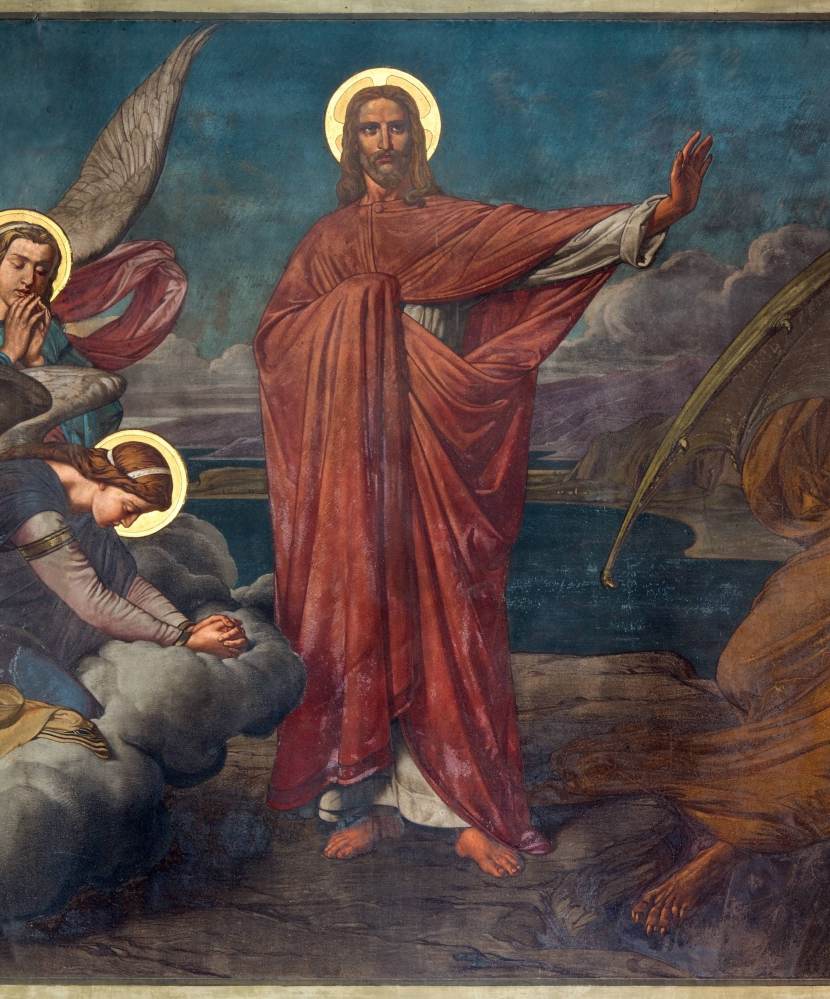
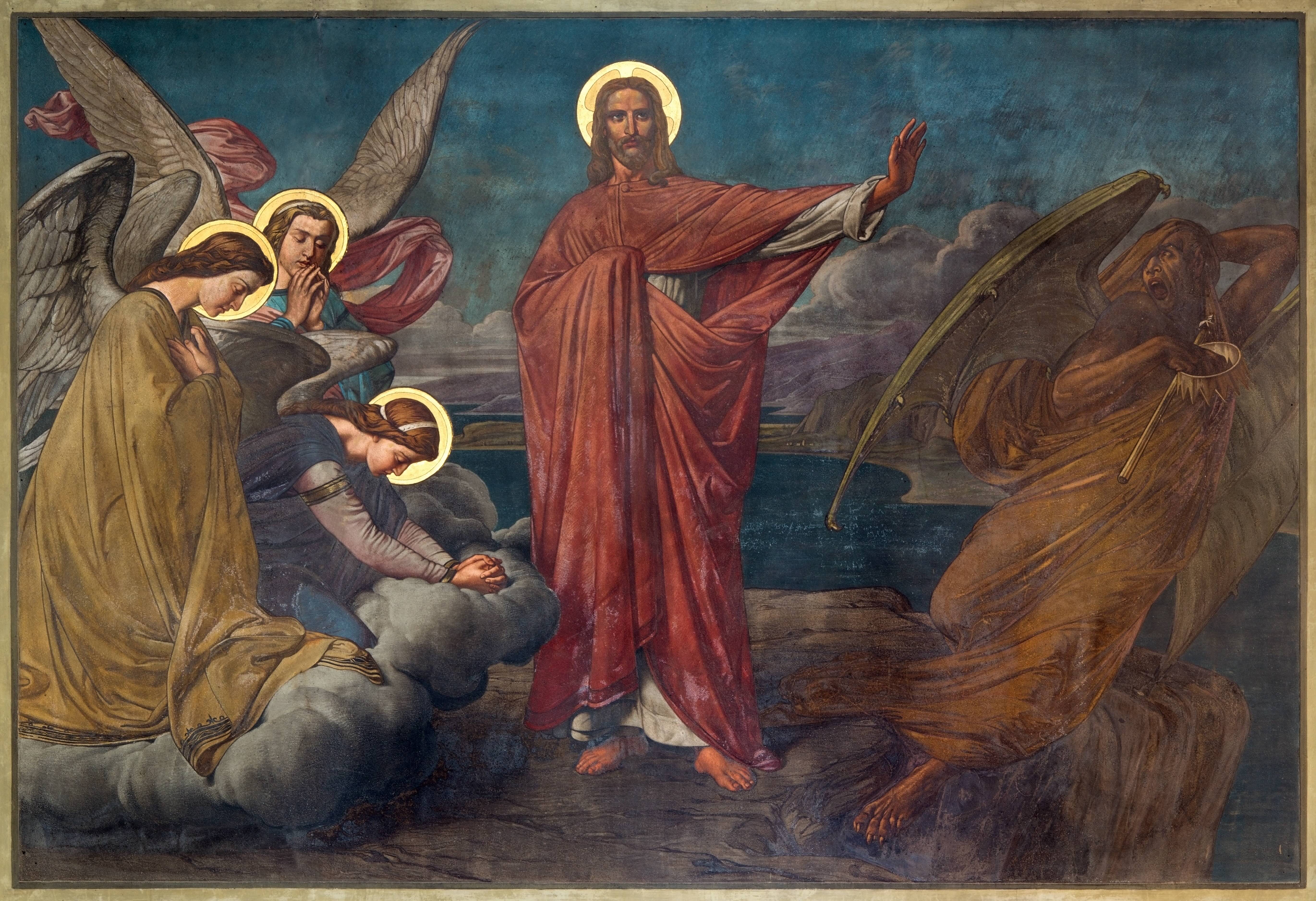
Satan’s Temptation of Jesus
The following excerpt is taken from What Every Christian Should Know About Satan. Order your copy in print, Kindle, or Audible versions here.
All three synoptic Gospels record the account of Jesus’ temptations in the wilderness. Let’s look at Matthew’s record since it alone refers to Satan as the tempter, although Mark and Luke are clear that it is the evil one tempting Jesus during this encounter.
Matthew 4:1-11 reads:
Continue readingThen Jesus was led up by the Spirit into the wilderness to be tempted by the devil. After he had fasted forty days and forty nights, he was hungry. Then the tempter approached him and said, “If you are the Son of God, tell these stones to become bread.”
He answered, “It is written: Man must not live on bread alone but on every word that comes from the mouth of God.”
Then the devil took him to the holy city, had him stand on the pinnacle of the temple, and said to him, “If you are the Son of God, throw yourself down. For it is written: He will give his angels orders concerning you, and they will support you with their hands so that you will not strike your foot against a stone.”
Jesus told him, “It is also written: Do not test the Lord your God.”
Again, the devil took him to a very high mountain and showed him all the kingdoms of the world and their splendor. And he said to him, “I will give you all these things if you will fall down and worship me.”
Then Jesus told him, “Go away, Satan! For it is written: Worship the Lord your God, and serve only him.”
Then the devil left him, and angels came and began to serve him (emphasis added).
Satan: Tempter

The following excerpt is taken from What Every Christian Should Know About Satan. Order your copy in print, Kindle, or Audible versions here.
In Homer’s Odyssey, the sirens are three mysterious women who live on an island. When ships pass, the sirens stand on the cliffs above and sing. Their hauntingly beautiful voices lure sailors to steer their vessels closer to shore until eventually they shipwreck on the rocky coast.
Odysseus is curious to hear the sirens’ songs as well, yet he knows the dangers. He orders his men to tie him to the ship’s mast as they approach the island. Then he instructs them to plug their own ears with beeswax.
As expected, when Odysseus hears the sirens’ call, he demands to be untied, but his shipmates obey his earlier command and bind him more tightly to the mast. Finally, they release him when the sirens’ song is no longer heard.
This ancient myth illustrates how the powerful pull of temptation is common to all people. We know all too well the perils of flirting with danger. Temptation is common to every human being. It was well-known to Jesus. Yet, despite being tempted in every way common to humanity, he emerged unscathed (Heb. 4:15).
Continue reading
Satan: Murderer by proxy
The following excerpt is taken from What Every Christian Should Know About Satan. Order your copy in print, Kindle, or Audible versions here.
As a general observation, Satan does not appear to murder directly, although he could – with God’s permission. Rather, the evil one carries out his murderous pursuits through various agents. We might say the evil one commits murder by proxy.
A few examples: When God permits Satan to test Job, the evil one uses the Sabeans and Chaldeans to kill Job’s stock, as well as some of Job’s servants (Job 1:15, 17). Satan then employs fire from heaven and a great whirlwind to kill more of Job’s servants and all of his children (Job 1:16, 18-19). He incites David to take a census of Israel, resulting in the deaths of many people (2 Sam. 24; 1 Chron. 21). He uses Roman and Jewish authorities, along with a back-stabbing apostle, to bring about the death of Jesus (Luke 22:3; John 13:2, 27). And he fills the hearts of Ananias and Sapphira to lie against the Holy Spirit, resulting in their deaths (Acts 5:1-11).
And there’s more.
Continue reading
Three kinds of death

The following excerpt is taken from What Every Christian Should Know About Satan. Order your copy in print, Kindle, or Audible versions here.
God warned Adam that if he disobeyed, he would die “on the day” he ate from the forbidden tree (Gen. 2:17). Yet Adam lived at least another eight hundred years, breathing his last at the age of 930 (Gen. 5:5). So, in what sense did Adam die on the day he sinned? A little background may prove helpful.
When the Bible says we are made in the image of God (Gen. 1:27), it means, at least in some respects, we are a trinity – not that we exist as three co-equal divine persons, but that we each possess a body, soul, and spirit. This means we also die in three stages as a consequence of sin.
The Fall affects each part of human beings’ threefold nature. As James Boice explains, “Specifically, his [man’s] spirit died, for the fellowship that he had with God was broken; his soul began to die, for he began to lie and cheat and kill; his body died eventually, for as God said, ‘Dust you are and to dust you will return’” (Gen. 3:19).
Continue reading
Satan the murderer

The following excerpt is taken from What Every Christian Should Know About Satan. Order your copy in print, Kindle, or Audible versions here.
James Fairweather was only fifteen years old when he stabbed a drunken and helpless man 102 times during an encounter in Colchester, England. Three months later, Fairweather stabbed a second victim in both eyes as she walked along a nature trail in the same Essex community, resulting in her death. He was stalking a third victim when police arrested him. What made his capture particularly chilling was his admission that he wanted to kill at least fifteen more people.
When the judge handed down the teenager’s sentence, Fairweather turned toward his parents and mouthed, “I don’t give a s—.”
Fairweather is one of the world’s youngest serial killers. He’s also one of the few who showed absolutely no remorse for his crimes. His mother branded him a “monster.” His teachers heard him express a desire to be a murderer but didn’t believe him, thinking him to be merely an “edgy teenager.” He idolized Peter Sutcliffe, the “Yorkshire Ripper,” and regarded American serial killer Ted Bundy as his favorite murderer. He claimed possession by the devil and said he heard voices in his head that compelled him to kill. Both killings showed elements of planning and sadism.
Continue reading OnceDelivered.net