
Category: End Times
Assemble them for battle: Revelation 16:14-16
Previously: The sixth bowl: Revelation 16:12-16
The scripture
Rev. 16:14 – For they are spirits of demons performing signs, who travel to the kings of the whole world to assemble them for the battle of the great day of God, the Almighty. 15 “Look, I am coming like a thief. Blessed is the one who is alert and remains clothed so that he may not go naked, and they see his shame.” 16 So they assembled them at the place called in Hebrew Armageddon. (HCSB)
Assemble them for the battle … in Armageddon
Now the kings of the world are assembled for “the battle of the great day of God, the Almighty” (v. 14). Verse 16 tells us the evil spirits assemble the kings at “the place called in Hebrew, Armageddon.” This is the only mention of “Armageddon” in the Bible. But the place is well known. The word “Armageddon” in Hebrew is har-megiddon, meaning “the mount of Megiddo.” Although there is no mountain by this name, the great city of Megiddo is strategically placed to guard the pass between the Mediterranean coast and the valley of Jezreel or Esdraelon.
 The outcome of this battle is reported in Rev. 17:14 and 19:11-21 as the Lamb obliterates the forces of evil. As the Dictionary of Biblical Prophecy and End Times points out, the gathering of the wicked for destruction is a common theme in the Old Testament. For example:
- In Joel 3:11-16 the Lord invites the nations to come to the “Valley of Jehoshaphat, for there I will sit down to judge all the surrounding nations.”
- In Zeph. 3:8 the Lord declares, “For My decision is to gather nations, to assemble kingdoms, in order to pour out My indignation on them, all My burning anger; for the whole earth will be consumed by the fire of My jealousy.”
- And in Zech. 12:3-4 and 14:2-5 Yahweh promises, “On that day I will make Jerusalem a heavy stone for all the people; all who try to lift it will injure themselves severely when all the nations of the earth gather against her…. I will gather all the nations against Jerusalem for battle…. Then the Lord will go out to fight against those nations as He fights on a day of battle …”
More specifically, the valley of Jezreel or Esdraelon is the site of many important battles in the history of Israel. It is the place where earthly kings are no match for the Lord’s heavenly host; indeed, they are punished for oppressing God’s people (Judges 5:19). It is where the prophets of Baal are slaughtered in the days of Elijah (1 Kings 18:40). And it is where good king Josiah is killed, resulting in national mourning (2 Kings 23:29; 2 Chron. 35:20-25).
A common thread in these battles is that this valley is a place where unrighteous nations attack the people of God. Certainly, Megiddo in scripture is connected with warfare. It’s possible, however, that John’s reference to Megiddo is in fact a reference to Jerusalem. David Stern writes, “[T]he final war may not take place at Har Megiddo at all, but in Jerusalem, at Har Migdo, the ‘mount of his choice fruit,’ i.e., the mountain of God’s blessing, Mount Zion. Mount Zion has already been mentioned at 14:1; moreover, the imagery resembles Joel’s picture of the Day of Adonai, when God’s power goes forth from Mount Zion against the forces of evil (Joel 2:1-11, 4:16-17 [3:16-17]; compare also Isaiah 31:4-9). The next passage (vv. 17-21) resembles 14:14-20, which also draws on imagery from Joel 4…. Strengthening the case further Zechariah 12:11 … mentions Jerusalem along with Megiddon” (Jewish New Testament Commentary, p. 835).
So how should we view Armageddon?

The sixth bowl: Revelation 16:12-16
Previously: The fifth bowl – Revelation 16:10-11
The scripture
Rev. 16:12 –The sixth [angel] poured out his bowl on the great river Euphrates, and its water was dried up to prepare the way for the kings from the east. 13 Then I saw three unclean spirits like frogs [coming] from the dragon’s mouth, from the beast’s mouth, and from the mouth of the false prophet. 14 For they are spirits of demons performing signs, who travel to the kings of the whole world to assemble them for the battle of the great day of God, the Almighty. 15 “Look, I am coming like a thief. Blessed is the one who is alert and remains clothed so that he may not go naked, and they see his shame.” 16 So they assembled them at the place called in Hebrew Armageddon. (HCSB)
Its water was dried up
The Euphrates River figures prominently in both the sixth trumpet judgment and the sixth bowl judgment. As you may recall, in the sixth trumpet judgment four demons bound at the Euphrates are released to lead a vast army that kills a third of the human race. Here, in the sixth bowl judgment, the waters of the great river are dried up to make way for the “kings of the east.”
 In 536 B.C., Cyrus the Persian devises a plan to divert the flow of the Euphrates River, which runs under the wall surrounding Babylon. This enables his soldiers to march under the wall, take Belshazzar by surprise and capture the city without serious resistance. It’s possible that John is drawing from this well-known historic event to prepare his readers for a swift and certain act of judgment, although it’s not necessary to interpret the drying of the waters literally. In fact, many commentators see the river as a symbol for political or religious boundaries, impediments to the advance of evil forces, or the geographic region from which many of Rome’s soldiers came to destroy Jerusalem in 70 A.D.
Some futurists, however, believe the Euphrates will indeed dry up, enabling a coalition of Eastern powers to sweep into the Holy Land. While the implication is that the water is dried up by an act of God, “the fact is that dams have been built across the Euphrates River in this [20th] century to divert water for irrigation so that there are times even today when there is little or no water in the Euphrates” (J.F. Walvoord, R.B. Zuck, The Bible Knowledge Commentary: An Exposition of the Scriptures, Rev. 16:12).
It’s worth noting the similarities between what happens here and what occurs in the crossing of the Red Sea and the march across the Jordan River as God’s people pass out of bondage and into the Promised Land. The miracle that Israel experiences in Old Testament times is now repeated in a negative sense, say preterists, as the first-century Jews who have rejected their Messiah are called into account for their national sin.

The fifth bowl – Revelation 16:10-11
Previously: The fourth bowl – Revelation 16:8-9
The scripture
Rev. 16:10 –The fifth [angel] poured out his bowl on the throne of the beast, and his kingdom was plunged into darkness. People gnawed their tongues from pain, 11 and blasphemed the God of heaven because of their pains and their sores, yet they did not repent of their actions. (HCSB)
Plunged into darkness
There is a sense in which the fourth and fifth bowl judgments offer the wicked a preview of hell. In the fourth bowl judgment the sun scorches the beast’s worshipers, and in the fifth bowl judgment the beast’s kingdom is plunged into darkness. Hell often is described in terms of fiery torment. It is “the lake of fire and sulfur” (Rev. 20:10); “the lake of fire” (Rev. 20:14-15); and “the lake that burns with fire and sulfur” (Rev. 21:8). Jesus describes it as “the eternal fire prepared for the Devil and his angels” (Matt. 25:41). Hell is where “the fire is not quenched” (Mark 9:48). And it is a place where the rich man is “in agony in this flame” (Luke 16:24).
 Jesus also describes separation from God as “outer darkness” where “there will be weeping and gnashing of teeth” (Matt. 22:13; 25:30).
Flame and darkness are fitting terms for God’s judgment upon sin and sinners. Fire consumes filth, and darkness aptly describes banishment from the presence of God, who is light (1 John 1:5). In John’s Gospel, Jesus Himself is “the light.” Note:
- John writes of Jesus, “Life was in Him, and that life was the light of men. That light shines in the darkness, yet the darkness did not overcome it” (John 1:4-5).
- John the Baptist comes as a witness “to testify about the light [Jesus], so that all might believe through him” (John 1:7).
- John describes Jesus as “The true light, who gives light to everyone” (John 1:9).
- Jesus declares, “I am the light of the world. Anyone who follows Me will never walk in the darkness but will have the light of life” (John 8:12).
- He further tells his disciples, “As long as I am in the world, I am the light of the world” (John 9:5).
- Jesus tells a crowd, “The light will be with you only a little longer. Walk while you have the light so that darkness doesn’t overtake you. The one who walks in darkness doesn’t know where he’s going. While you have the light, believe in the light so that you may become sons of light” (John 12:35-36). And His concluding testimony is that He came into the world as light so that no one who believes in Him should remain in darkness (John 12:46).
The Greek word for light, phos, appears 23 times in the Gospel of John and 73 times in the New Testament. Most of the time it is used figuratively to depict holiness, purity, or godliness. Jesus uses the term in the Sermon on the Mount to portray the holy standard of conduct expected of His disciples (Matt. 5:14-16; 6:23).
The fourth bowl: Revelation 16:8-9
Previously: The third bowl – Revelation 16:4-7
The scripture
Rev. 16:8 –The fourth [angel] poured out his bowl on the sun. He was given the power to burn people with fire, 9 and people were burned by the intense heat. So they blasphemed the name of God who had the power over these plagues, and they did not repent and give Him glory (HCSB).
And people were burned
The fourth angel pours out his bowl on the sun, resulting in intense heat that burns people. While the first three bowl judgments are directed toward the earthly elements – namely, the earth, sea, rivers and springs of water – the fourth judgment is aimed skyward, toward the light-bearing and warmth-giving orb that interacts with the earthly elements to sustain life.
 This angel, like others we have encountered, is granted authority over some part of the physical universe. In this case, he is given the power to burn people, and he uses the fusion-powered heat of the sun to carry out his task. (Some versions, it must be noted, render the word “it” rather than “he,” indicating that the sun is personified as in Ps. 19:1-6.) At its core, the sun is 27 million degrees Fahrenheit. Even the coolest part of the sun – the sun spot – is 6,700 degrees Fahrenheit, several times hotter than the lava from a volcano (www.planetfacts.org).
The earth is about 93 million miles from the sun. As the earth circles the sun in an elliptical route, the distance between the two varies from about 91 million miles to 94.5 million miles, contributing to our seasons. While that fluctuating distance seems to leave a lot of wiggle room, the fact is that if the earth passed much closer to or farther from the sun, life would be far different here, if possible at all. God created the earth and the stellar heavens to support His special creation on earth, and He holds all things together (Col. 1:17).
If the fourth bowl judgment is to be taken literally, perhaps the Lord empowers the angel to move the earth and the sun a little closer together. Or, he may simply crank up the process by which the sun generates heat. In any case, people on earth feel the impact and are burned. It appears that the people burned are those who worship the beast, for we see that they blaspheme God and refuse to repent.
The third bowl – Revelation 16:4-7
Previously: The second bowl – Revelation 16:3
The scripture
Rev. 16:4 –The third [angel] poured out his bowl into the rivers and the springs of water, and they became blood. 5 I heard the angel of the waters say: You are righteous, who is and who was, the Holy One, for You have decided these things. 6 Because they poured out the blood of the saints and the prophets, You also gave them blood to drink; they deserve it! 7 Then I heard someone from the altar say: Yes, Lord God, the Almighty, true and righteous are Your judgments. (HCSB).
The rivers and springs became blood
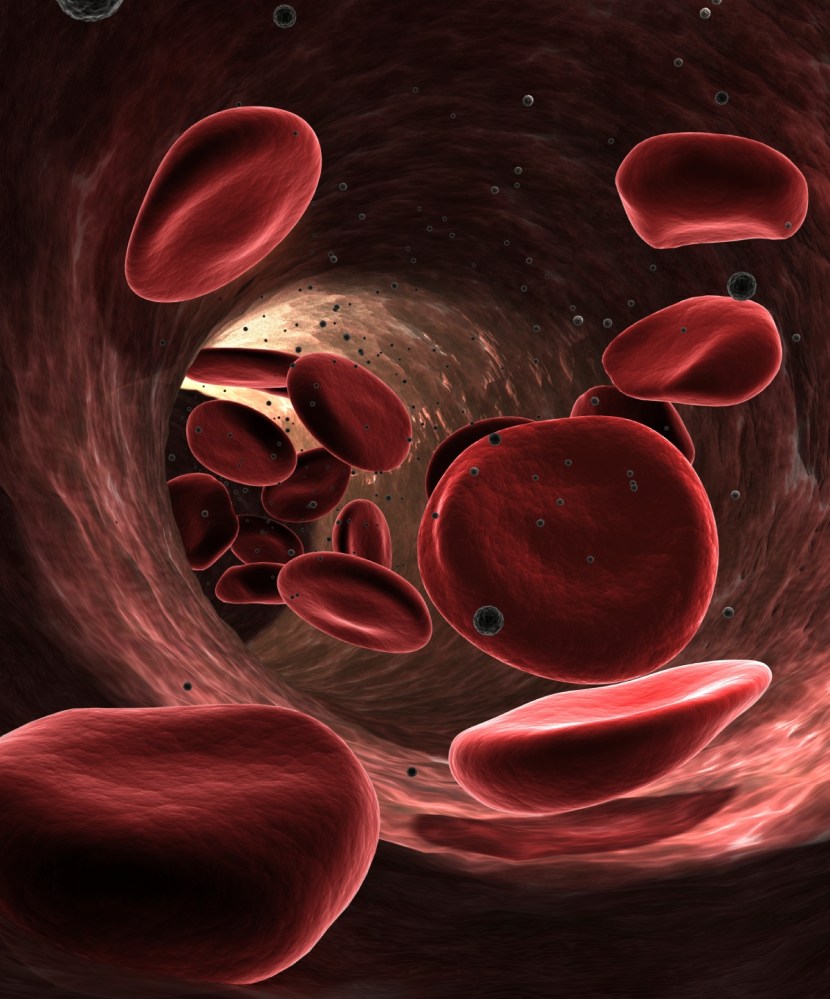
 The third bowl judgment is similar to the third trumpet judgment in which a third of the rivers and springs became bitter (Rev. 8:10-11). Now, however, it appears that all the fresh water is impacted as it turns to blood.
Some commentators who hold to figurative interpretations of this passage see the rivers and springs of water as “learned men” who, like streams, convey “the venom and poison of their errors and idolatries from the spring-head through the earth” (Matthew Henry’s Commentary on the Whole Bible: Complete and Unabridged in One Volume, Rev. 16:1-7). The water turning to blood signifies the godly vengeance taken upon their lives for the physical and moral harm they have inflicted on the saints. Other interpreters see the rivers and springs as depicting the joys and pleasures of life, which are poisoned by sin.
While these graphic images capture well the corrupting work of sin and God’s judgment upon it, a literal view may be the best, especially if John is describing what takes place inside the walls of Jerusalem during the Roman siege in 70 A.D. We know that water sources became polluted. In addition, death was so widespread that streams of blood literally flowed in the streets. So complete was the devastation that Jewish factions within the walls sabotaged each other’s supplies and fought a civil war within their city’s gates. A local understanding of this vision is easier to fathom than worldwide poisoning of all drinking water. Of course, God is able to accomplish this – either by direct intervention or through indirect means such as natural disasters or nuclear warfare.
The point is clear: Those who persecute the bride of Christ will find judgment that fits the crime.
Continue reading
 OnceDelivered.net