
Features of New Jerusalem: Part 2
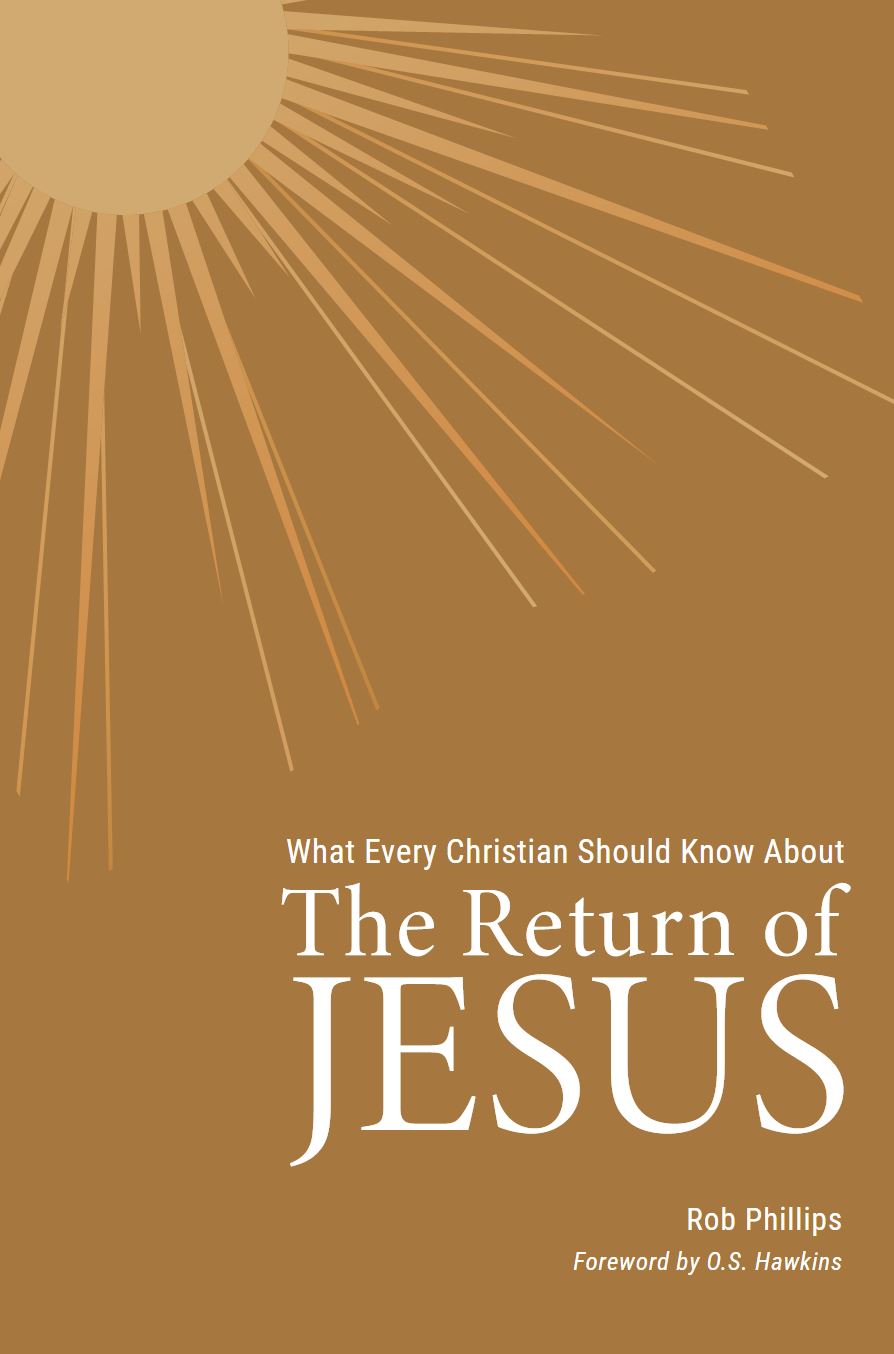
This is another in a series of excerpts from What Every Christian Should Know About the Return of Jesus, released by High Street Press and available at Amazon.
In the previous post, we began to explore some key features of New Jerusalem. We continue this study now.
New Jerusalem is arrayed with God’s glory.
John writes of New Jerusalem, “Her radiance was like a precious jewel, like a jasper stone, clear as crystal” (21:11). The most significant quality of New Jerusalem is stated at the outset: it is the radiance of God, the sign of his visible presence.
As in the burning bush, the pillar of cloud and fire, the Shekinah glory in the holy of holies, and the brilliance of Jesus’ presence on the mount of transfiguration, God is light, and in him there is no darkness at all (1 John 1:5). Isaiah foretells the work of the divine warrior who penetrates the earth’s spiritual darkness (Isa. 59:17-21). As a result, Isaiah exults, “Arise, shine, for your light has come, and the glory of the LORD shines over you” (Isa. 60:1).
In a similar fashion, Ezekiel sees the glory of God returning through the eastern gate of the temple, from which the glory had earlier departed. He describes it in these terms: “I saw the glory of the God of Israel coming from the east. His voice sounded like the roar of a huge torrent, and the earth shone with his glory” (Ezek. 43:2).
God’s glory always is depicted as radiant. John seems to pick up on the prophecies of Isaiah and Ezekiel and apply them to their ultimate fulfillment in the glorious return of Christ with his saints. Further, he compares the light proceeding from God to that of the jasper jewel.
In Revelation 4:2-3, John sees a throne set in heaven. The one seated on the throne looks like a jasper and carnelian stone. And now, in Revelation 21:11, the bride has a similar radiance. What could be more perfect than the glory of God shining through his people?
Charles Swindoll writes that when John compares the brilliant glory of God to a jasper stone – the Greek word is iaspis – he probably doesn’t mean the modern stone that comes in a variety of colors, but rather an unblemished, perfectly clear diamond that refracts the blazing glory of God. “Nothing on earth begins to compare to what God has prepared for us, since any choice of words fails to capture the breathtaking intensity of His glory.”
New Jerusalem is a vast cube-shaped structure in which the number twelve plays a prominent role and ornamentation is abundant (Rev. 21:12-21).
In these verses, John describes the exterior of New Jerusalem, turning to the interior in verses 22-27. The city is laid out in a cube. Its length, width, and height are 12,000 stadia, or about 1,400 miles, in each direction. The wall surrounding the city is 144 cubits, or more than two hundred feet, thick.
Bible commentators are divided as to whether these dimensions are to be understood literally or figuratively. Those who argue for a symbolic representation point out that the repeated use of the number twelve depicts the majesty, vastness, and perfection of the Lamb’s bride, not physical dimensions.
However, a literal understanding should not be rejected. Christ is returning to earth personally and physically. He is creating new heavens and a new earth – real places. And he has promised to bring us back with him – in glorified bodies, no less. The totally refurbished heavens and earth may easily accommodate a city housing billions of people and spanning a space roughly equivalent to the eastern half of the United States.
It’s important to note the cube shape of the city, which corresponds to the holy of holies in the temple. Since John sees no temple in the city (Rev. 21:22), we may infer that the whole city is the temple, or more specifically, the true holy of holies, where the triune Godhead resides in undiminished glory. Just as our bodies are temples of the Holy Spirit now (1 Cor. 3:16), New Jerusalem – the bride of the Lamb – is corporately the spiritual household built up for God’s habitation with redeemed people (see Eph. 2:19-22; 1 Tim. 3:15; Heb. 3:6; 1 Pet. 2:4-5).
The ancient cities of Babylon and Nineveh were designed in the shape of a square. They had substantial length and width but lacked equivalent height. But the city of God surpasses these human endeavors in its harmony, being cube-shaped, which in the ancient world symbolized supreme completeness. The immensity of New Jerusalem dwarfs the greatest man-made cities of human history.
The number twelve
The number twelve figures prominently in John’s description of the city. The walls have twelve gates. Twelve angels are at the gates. The names of the twelve tribes of Israel are inscribed on the gates. The city has twelve foundations, bearing the names of the twelve apostles. New Jerusalem measures 12,000 stadia in length, width, and height. The walls are 144 cubits thick – twelve by twelve cubits. And the gates consist of twelve massive pearls. So, what’s the significance of the number twelve?
The number twelve appears 187 times in God’s word, twenty-two times in the Book of Revelation. It’s considered a perfect number in that it symbolizes God’s authority. The number twelve also depicts completeness, or the nation of Israel as a whole. For example, Jacob (Israel) has twelve sons who father the twelve tribes of the nation. This is important because if New Jerusalem in fact comprises the whole people of God under the Old and New Covenants, then we have in this heavenly city the true Israel to which the New Testament writers point.
It may help to note a few other places in Scripture where the number twelve is featured. In Leviticus 24, God specifies that twelve unleavened cakes of bread be placed every week in the temple. In the Gospels, Jesus selects twelve men as apostles; these men (with the apostles choosing Matthias to replace Judas Iscariot) carry on his authority after his ascension and bear witness of his finished work of redemption. In Revelation 7, we see 144,000 (12 x 12 x 1000) sealed servants of God, and in Revelation 14 these same servants appear on the heavenly Mount Zion with the Lamb.
Other examples could be listed, but the point is that the Lord uses this number throughout the Bible to indicate perfection, completeness, and authority. So, the extensive use of the number twelve in Revelation 21 seems to illustrate that New Jerusalem represents true Israel, or the redeemed people of God throughout human history. The redeemed form a massive holy of holies for God, whose radiance shines through them. This stands in contrast with the ancient tabernacle and temple, where the Shekinah glory, depicting the presence of God, is confined to the innermost sanctuary and rarely seen by his people.
Clear as glass
Lastly, a few words about the city’s ornamentation. John writes, “The building material of its wall was jasper, and the city was pure gold clear as glass” (Rev. 21:18). This image of transparent purity is echoed throughout Scripture to describe the refined character of God’s sanctified people (e.g., Job 23:10; Zech. 13:9; Mal. 3:3; 1 Pet. 1:7; Rev. 3:18).
The twelve gems adorning the city’s foundations (Rev. 21:19-20) call to mind the twelve precious stones the high priest wears on his breastplate, although the match is not identical (see Exod. 28:15-21). Steve Gregg writes, “Since these same stones bear the names of the twelve apostles, it could be understood as a statement about the leadership of the people of God having transferred from the high priesthood of the temple to the apostles of the church.”
Charles Swindoll notes four characteristics of the materials used to adorn the city.
First, “every kind of jewel” (Rev. 21:19) may symbolize the great diversity of people who dwell in the city. After all, Jesus’ blood has purchased people from “every tribe and language and people and nation” (Rev. 5:9).
Second, the transparent nature of the city’s walls contrast the solid and secret nature of physical barriers sinful and fallen people employ today to hide their sins and keep others at a distance.
Third, the gates leading into the city are each created from one giant pearl. The pearl is a gem formed within the oyster – the only organically produced precious stone John lists in this passage. Thus, the pearl symbolizes pain resulting in beauty – a perfect depiction of Christ, whose suffering had an eternal purpose and opened heaven for us (see John 10:9; 14:6).
Fourth, the gold streets of the city reveal an opulence that surpasses even the marble-paved streets of Ephesus, where John lived out his days. Swindoll writes, “Gold, for which countless criminals have killed, will be tread upon like asphalt. No vanity. No materialism. No envy or greed. Best of all, no one will be poor in a place that paves its streets with gold.”
Next: Features of New Jerusalem: Part 3
 OnceDelivered.net