
Features of New Jerusalem: Part 1
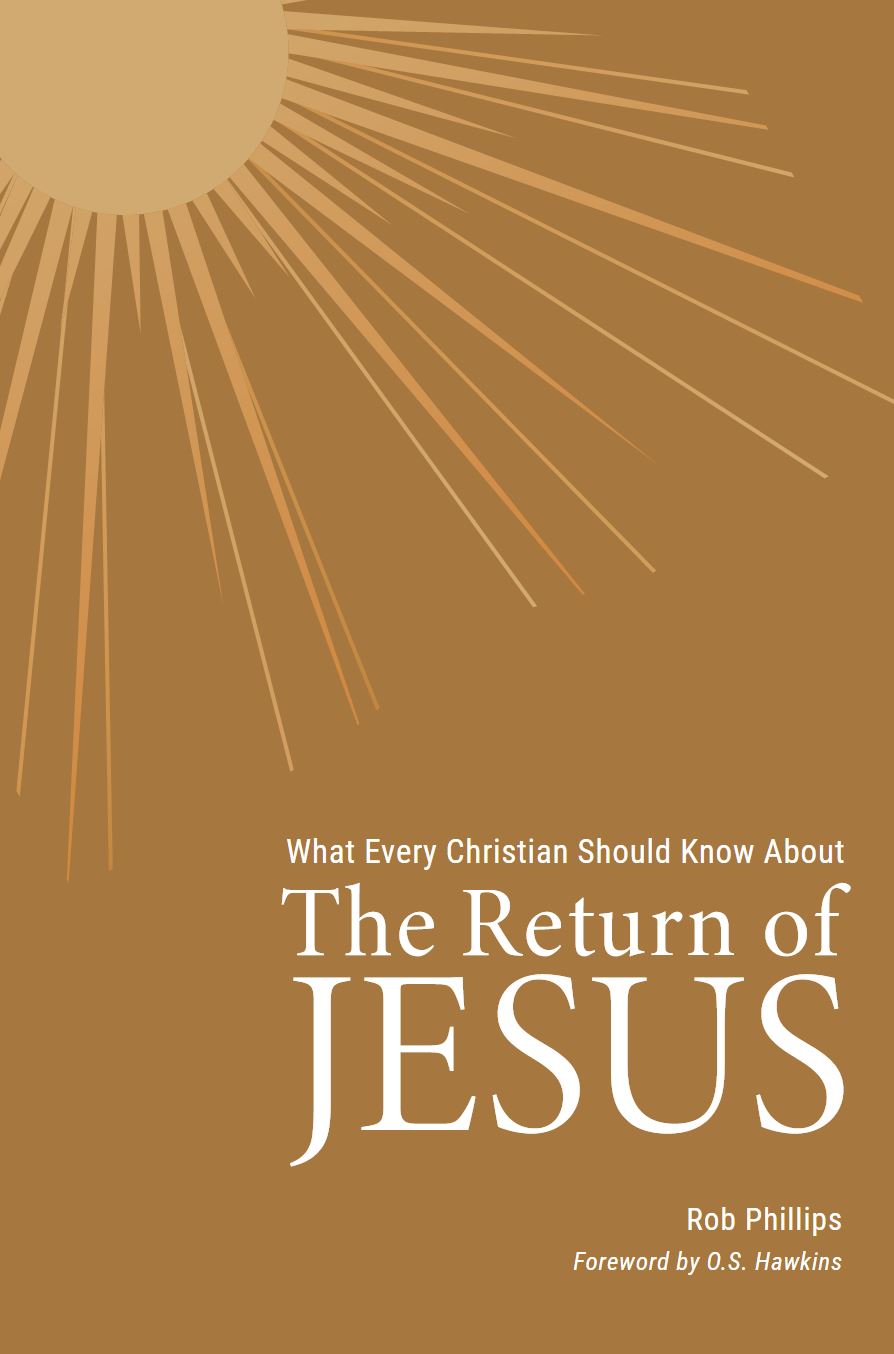
This is another in a series of excerpts from What Every Christian Should Know About the Return of Jesus, released by High Street Press and available at Amazon.
In the previous post, we began to focus on John’s vision of New Jerusalem and the new heavens and earth (Rev. 21-22). Now, we begin a series of posts that explore some key features of New Jerusalem.
New Jerusalem is a holy city (Rev. 21:2, 10).
Humans have built many great cities over the centuries, from ancient Babylon to modern-day Tokyo. But New Jerusalem is unique in that it is a city built without hands. The writer of Hebrews tells us Abraham saw New Jerusalem from afar. He may have lived in tents as a foreigner in the Promised Land, but “he was looking forward to the city that has foundations, whose architect and builder is God” (Heb. 11:10).
New Jerusalem is a holy city because it is the city of God. It is his home, his dwelling place, and he invites us to live there forever with him. It is a holy place because God is holy – set apart, unique, perfect, and righteous. God’s otherness sets him apart from all creatures. He is eternal, all-knowing, all-powerful, everywhere present, unchanging, and transcendent. Wherever God visits creation, that place is holy ground, as Moses and Joshua experienced (Exod. 3:5; Josh. 5:15).
In our future resurrection and glorification, we are fully conformed to the image of Christ. We are perfected in body, soul, and spirit, prepared to take up everlasting residence in the city of God, and fulfilling what Peter could only exhort us to do: “do not be conformed to the desires of your former ignorance. But as the one who called you is holy, you also are to be holy in all your conduct; for it is written, Be holy, because I am holy” (1 Pet. 1:14-16; cf. Lev. 11:44).
New Jerusalem comes down out of heaven from God (Rev. 21:2, 10).
The Bible describes the third heaven – beyond the atmosphere and outer space – as God’s dwelling place, where he rules from his throne. Sometimes, he grants sinful humans a glimpse into the throne room.
The prophet Isaiah is given a vision of the Lord, who is seated on a high and lofty throne. Seraphim declare his superlative holiness – “Holy, holy, holy is the LORD of Armies.” The foundations shake, the heavenly temple is filled with smoke, and all the prophet can cry is, “Woe is me, for I am ruined” (Isa. 6:1-5).
Paul is “caught up” to the third heaven, where he hears “inexpressible words, which a human being is not allowed to speak.” The “extraordinary revelations” are so otherworldly, Paul writes that “a thorn in the flesh was given to me, a messenger of Satan to torment me so that I would not exalt myself” (2 Cor. 12:2-10).
Of course, John provides us with the most detailed view into paradise. One vision features the Lord on his throne; twenty-four robed elders on thrones of their own; the seven-fold Spirit of God; a sea of glass; four living creatures who repeat the praise of Isaiah 6: “Holy, holy, holy;” the Lamb of God who is worthy to take the scroll from the one seated on the throne; an innumerable host of angels; and “every creature in heaven, on earth, under the earth, on the sea, and everything in them” declaring praise to the one seated on the throne, and to the Lamb (Rev. 4-5).
Now, near the end of John’s visions, he sees the throne room of God – off limits to sinful human beings since the Fall – coming down out of heaven (Rev. 21-22). Like Isaiah and Paul, John is overwhelmed. He falls down to worship at the feet of the angel who has shown him all of this, and he’s immediately rebuked. “Don’t do that!” the angel cries. “Worship God!” (22:8-9).
New Jerusalem comes down out of heaven because God’s throne sits above and beyond the created order. It comes down because God is higher and holier than those created in his image. It comes down because God is restoring Eden, the intersection of the physical and spiritual realms. It comes down because God is gracious, merciful, and kind. He does all the work of creation, redemption, and restoration. He condescends to bring heaven down to earth for his glory and our everlasting enjoyment.
We should note that while God dwells with human beings on a new earth, he does not cease to reside in the third heaven at the same time. That is, heaven – the unseen realm where God abides – does not melt into the new earth, sky, and space. God is omnipresent. He cannot be confined to a single location although he may be fully present in any location.
We recall that Jesus’ deity was not confined to his humanity, although the Son of Man was fully human. The Shekinah glory in the burning bush, the pillar, the chariot of fire, and the holy of holies represented the full presence of God, but not the complete presence of God. God also is transcendent, which means while he abides with us on the new earth, he continues to transcend the earthly sphere and reside in the unseen realm with angels, as he did before. This does not diminish his presence with us, and it should not cause us to doubt that we will enjoy God fully in our glorified states.
New Jerusalem is described as the bride, the wife of the Lamb (Rev. 21:2, 9).
Old Testament writers sometimes liken Israel to the Lord’s wife. Yahweh refers to himself as Israel’s husband in order to communicate his special love for the nation. For example, the prophet Isaiah says to Judah, “Indeed, your husband is your Maker – his name is the LORD of Armies – and the Holy One of Israel is your Redeemer; he is called the God of the whole earth” (Isa. 54:5).
But the nation proves to be an unfaithful spouse, spiraling into spiritual adultery, forsaking the Lord and his commandments, and running into the arms of false gods. The northern kingdom of Israel is first, and the Lord sends her “a certificate of divorce” and sends her away – a reference to the Assyrian invasion (Jer. 3:8; cf. 2 Kings 17:5-7). Judah is next, unless she repents, Yahweh warns.
And yet, the Lord invites his people back: “Return, unfaithful Israel. This is the LORD’s declaration. I will not look on you with anger, for I am unfailing in my love…. I will not be angry forever” (Jer. 3:12). God promises to do what the Mosaic Law could never do: restore a broken marriage between a faithful husband and an unfaithful wife who has married another.
Another illustration of God’s unfathomable goodness is found in the story of the prophet Hosea, whom God commands to marry a prostitute. When she persists in immorality, the Lord directs Hosea to buy her back. Hosea’s grace toward an unfaithful wife pictures God’s grace toward rebellious people.
In the New Testament, Christ is the bridegroom and the church is his bride. Jesus makes this clear in his teaching. For example, when the disciples of John the Baptist ask Jesus why his followers don’t fast as they do, Jesus replies, “Can the wedding guests be sad while the groom is with them? The time will come when the groom will be taken away from them, and then they will fast” (Matt. 9:15).
Jesus’ parables of the wedding banquet and the ten virgins also reveal truths about the special relationship between Christ and his followers (Matt. 22:1-14; 25:1-13). Even John the Baptist understands the role of Messiah as bridegroom to his church: “He who has the bride is the groom. But the groom’s friend [John], who stands by and listens for him, rejoices greatly at the groom’s voice. So this joy of mine is complete. He must increase, but I must decrease” (John 3:29-30).
Paul further touches on this truth: “For I am jealous for you with a godly jealousy, because I have promised you in marriage to one husband – to present a pure virgin to Christ” (2 Cor. 11:2).
So, if true Israel – comprised of Old and New Covenant believers – is the virgin bride and faithful wife of the Lamb, in what way is it connected to New Jerusalem in Revelation 21? The city is pictured as a bride because it houses the redeemed and takes on their character. Old and New Covenant believers are fully conformed to the image of Christ. That is, they see Jesus as he is and become like him (1 John 3:2).
Jesus promises to prepare a place for us in heaven (John 14:3). He further promises that wherever he lives, we also will live (John 14:19). We enter heaven disembodied in the intermediate stage between physical death and resurrection. But now, in Revelation 21, the redeemed in heaven are resurrected and glorified saints. We are perfected in holiness and ready to descend from heaven with our bridegroom. The marriage supper of the Lamb has taken place in heaven (Rev. 19:7-9), and now the groom and his bride are presented as entering their eternal state in the celestial city that comes down from God out of heaven.
Some commentators believe the church, or a single body of Old and New Covenant saints, constitutes New Jerusalem, and therefore we are to read Revelation 21 symbolically. Proponents of this view cite 1 Corinthians 3:16, in which Paul reminds us that our bodies are temples of the Holy Spirit. Peter also describes Christians as living stones, being built into a spiritual house for a holy priesthood to offer spiritual sacrifices unto God, with Jesus as the chosen and honored cornerstone (1 Pet. 2:4-6).
So, it may be possible that glorified saints of all time provide the perfect habitation for Christ as he descends to earth and dwells among his people. Just as a bridegroom leaves his father’s home and establishes a new home with his bride, Jesus one day descends from heaven to earth with the redeemed and fully establishes his kingdom on earth, with God’s people providing a pure and everlasting habitation for their Savior.
If we embrace this view, we should be careful not to take the symbolism too far. Jesus is not leaving the Father and the Holy Spirit behind in heaven when he creates new heavens and a new earth. The triune Godhead inhabits the throne room in heaven today, and no doubt the three persons of the Trinity are the ruling dignitaries in Eden restored.
With all that Scripture says about New Jerusalem, it’s best to understand the city both as a literal metropolis and as a reference to the people of God. As Alan Gomes points out:
So, the NJ [New Jerusalem] refers to the people in [Rev.] 21:9-10, when the angel shows John the NJ as a bride. But it is a place in 21:3, which speaks of God as dwelling there; in 21:24, 26, when people “inherit” it; and in 21:24, 26, when the text describes the nations as entering it.
Next: Features of New Jerusalem: Part 2
 OnceDelivered.net