
Our Eternal Home: Part 2
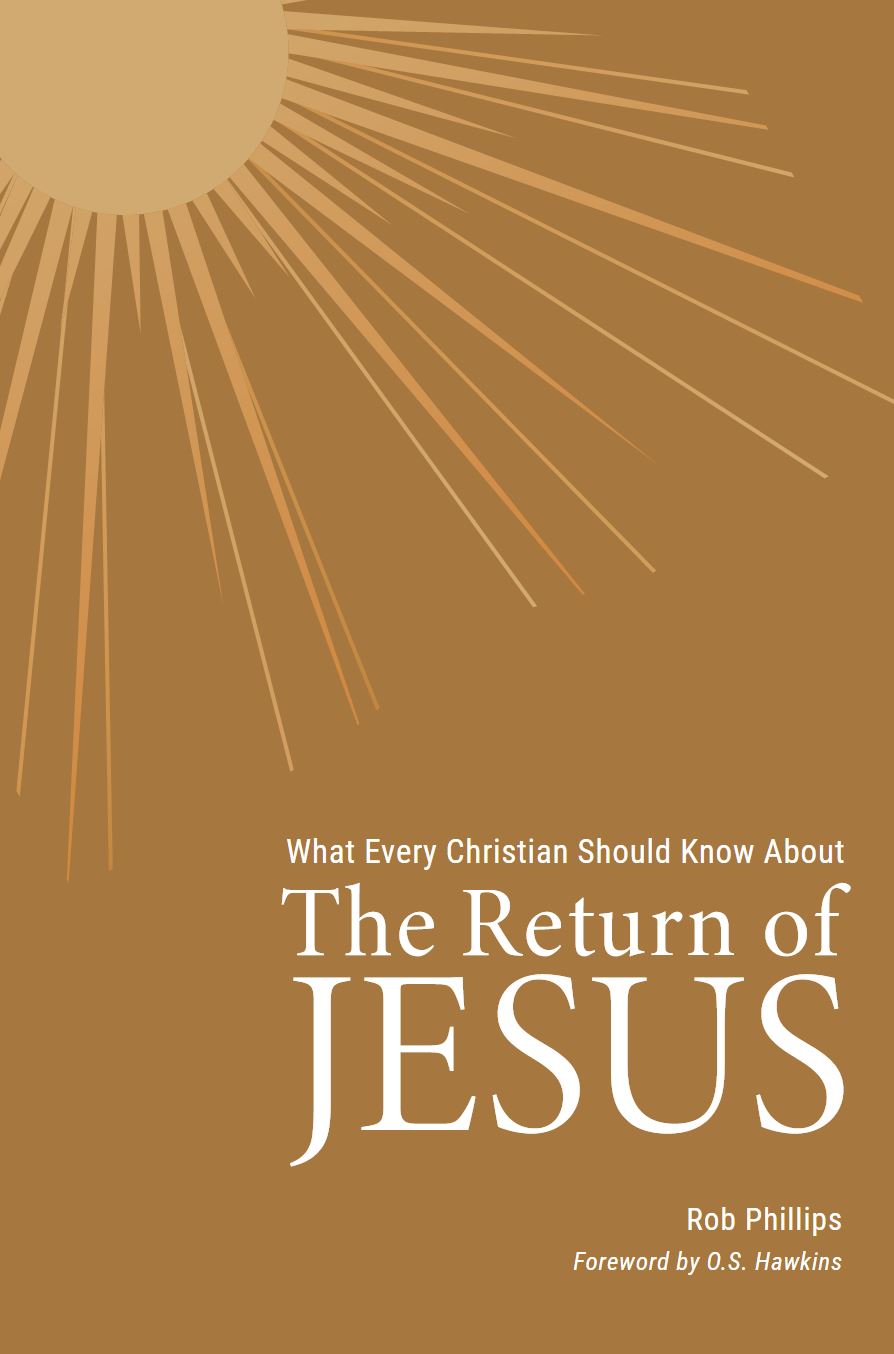
This is another in a series of excerpts from What Every Christian Should Know About the Return of Jesus, released by High Street Press and available at Amazon.
In the previous column we looked at Jesus’ words about “the renewal of all things” (Matt. 19:28). Now, we’ll examine Peter’s writing about “the day of the Lord.”
2 Peter 3:10-13
But the day of the Lord will come like a thief; on that day the heavens will pass away with a loud noise, the elements will burn and be dissolved, and the earth and the works on it will be disclosed. Since all these things are to be dissolved in this way, it is clear what sort of people you should be in holy conduct and godliness as you wait for the day of God and hasten its coming. Because of that day, the heavens will be dissolved with fire and the elements will melt with heat. But based on his promise, we wait for new heavens and a new earth, where righteousness dwells.
Before Jesus introduces us to new heavens and a new earth, he must first deal with the sinful corruption of the universe as we know it. This “day of the Lord” comes suddenly and unexpectedly, the way a thief uses the element of surprise to plunder the goods of unsuspecting victims. But, once that day comes, the Lord introduces it with great fanfare.
Jesus declares, “Heaven and earth will pass away” (Matt. 24:35). The writer of Hebrews picks up Old Testament language that describes heaven and earth wearing out like clothing (Heb. 1:11; cf. Ps. 102:26; Isa. 51:6). And the prophet Isaiah offers a similar view: “All the stars in the sky will dissolve. The sky will roll up like a scroll, and its stars will all wither as leaves wither on the vine, and foliage on the fig tree” (Isa. 34:4).
The heaven and earth to which biblical writers refer are the entire created order: the earth, the sky, and space, but not God’s throne in heaven, for sinless perfection always has reigned there. The Hebrew has no word for “universe,” so the phrase “heaven and earth” are meant to depict the full physical realm.
But do the fires of judgment annihilate or refine? This is a key question about which Bible commentators disagree. And it’s a question that’s central to our understanding of 2 Peter 3:10-13 and John’s vision of “a new heaven and a new earth; for the first heaven and the first earth had passed away” (Rev. 21:1).
Some notable commentators see the fleeing of earth and heaven as the uncreation of the universe. They believe earth and heaven are not refashioned; they go completely out of existence. That’s why John writes that “no place was found for them” (Rev. 20:11). This view is known as the annihilation and replacement model.
“This is nothing less than the sudden, violent termination of the universe,” writes John MacArthur. American theologian Donald Barnhouse comments:
There is to be an end of the material heavens and earth which we know. It is not that they are to be purified and rehabilitated, but that the reverse of creation is to take place. They are to be uncreated. As they came from nothing at the word of God, they are to be sucked back into nothingness by the same word of God.
But is this the case? Does the universe, which Christ spoke into existence out of nothing and declared “very good indeed,” truly return to nothingness? Many Bible commentators argue against the annihilation and replacement model in favor of the so-called renewal position. Consider the following arguments against annihilation of the physical realm and in favor of restoration at Christ’s return.
First, Jesus speaks of this event as “the renewal of all things” (Matt. 19:28), not the annihilation and replacement of all things.
Second, the words Jesus, Peter, and John use to describe this event do not mean heaven and earth vanish into nothingness. We examine Peter’s use of “pass away,” dissolved,” and “disclosed” in more detail shortly. Meanwhile, we’ve already noted that Peter and John’s use of “new” is the Greek kainos, which means new in quality, not recreated ex nihilo.
Third, the annihilation of the present heavens and earth would run contrary to God’s promise to restore the cosmos. The flood of Genesis 9 shows the earth completely covered with water but not uncreated. In a similar way, Peter compares the destruction of the present heaven and earth by fire with the destruction of the earth by water in Noah’s day (see 2 Pet. 3:5-7).
Fourth, annihilation of the cosmos would cast doubt on Christ’s work of redemption, which necessarily includes the cosmos. After dying for our sins, Jesus rises physically from the dead as the “firstfruits” of all believers who have died (1 Cor. 15:20). While Christ’s glorified body is a significant improvement over his pre-passion body, it is still his body, which the Father renovates in resurrection.
So, we should not think God’s work of salvation removes all traces of our existence. Paul certainly doesn’t teach this (see 1 Cor. 15). There must be continuity between the old and the new. While our resurrected bodies are meant to last forever in a glorified state, we retain our unique identities, personalities, and interests – only, they are purged of sin’s stain. The same holds true for the fallen world in which we live. In the palingenesia, trees, hills, and birds retain their properties, yet they are restored to mint condition.
Fifth, annihilation implies that God’s good creation is not fixable. Although God declares his entire creation “very good indeed” (Gen. 1:31), he allows rebellious angels and wicked people to poison it. But God has abandoned neither his creatures nor their environment. He enters the physical realm as the God-Man, lives among us, and redeems us. Satan does not get the last word in the destiny of the cosmos.
When people trust in Christ and become new creations (2 Cor. 5:17), they do not cease to exist momentarily and then emerge as different persons with new DNA; rather, they are transformed qualitatively as the indwelling Spirit gives them new desires, perspectives, and outlooks.
Sixth, to annihilate the present heavens and earth and start over from scratch would cede ground to Satan. In effect, the Lord would be compromising with the evil one. Sure, Satan would spend eternity in hell, along with fallen angels and rebellious humans. But it would be a partial victory for the father of lies in that he was able to permanently undermine God’s good creation.
These are important truths to keep in mind. In Randy Alcorn’s seminal book, Heaven, he points out that God has never given up on his original creation. Yet, somehow, we’ve managed to overlook an entire biblical vocabulary that makes this point clear.
Alcorn invites us to consider the words “reconcile,” “redeem,” “restore,” “recover,” “return,” “renew,” “regenerate,” and “resurrect.” Each of these biblical words begins with re-, corresponding to the Greek prefix ana. In each case, the prefix suggests a return to an original condition that was ruined or lost.
For example, “reconciliation” means the restoration of a prior friendship or unity. “Renewal” means to make new again, restoring to an original state. And “resurrection” means becoming physically alive again, after death has occurred. As Alcorn notes, “God is the ultimate salvage artist. He loves to restore things to their original condition – and make them even better.”14
Theologian Albert Wolters makes a fascinating observation:
… all of Jesus’ miracles (with the one exception of the cursing of the fig tree) are miracles of restoration – restoration to health, restoration to life, restoration to freedom from demonic possession. Jesus’ miracles provide us with a sample of the meaning of redemption: a freeing of creation from the shackles of sin and evil and a reinstatement of creaturely living as intended by God.
To summarize, Peter is not arguing in favor of the annihilation of the universe at Christ’s return. He’s saying the fires of judgment are intended to remove the dross from a fallen world and purify what remains. In a similar way, we must remember that salvation is holistic; it’s intended for the full human being – body, soul, and spirit. God is not going to uncreate what he created and called “very good.” He’s going to redeem believing humans and restore our sin-wrecked environment.
With that in mind, let’s explore key words and phrases Peter uses in this passage.
The heavens will pass away with a loud noise (2 Pet. 3:10). The phrase “the heavens,” here and in verse 12, refers to the atmospheric and interstellar realms – the physical space in which earth hangs and moves. To “pass away” comes from the Greek parerchomai. While it may mean to “pass by,” “neglect,” or even “come near,” in this context it means “to perish.”16 This does not imply the uncreation of the physical world, as we noted earlier. Rather, it means the Lord purges the physical realm in such a way as to remove the last vestiges of sin. Put another way, the world as we know it today is forever changed for the better.
The words “loud noise” come from the Greek rhoizedon. In classical Greek, it depicts the whistling of an arrow; the sound of a shepherd’s pipe; the rush of wings; the splash of water; the hissing of a serpent; even the sound of filing.17
This is a day Jesus describes in the Olivet Discourse (see Matt. 24:35). It’s going to be a noisy day, accompanied by the whooshing, crackling, rumbling sounds of a raging wildfire that consumes physical materials and even the air surrounding them. Some commentators believe the “loud noise” depicts the archangel’s voice and the trumpet of God that accompany Christ’s return (see 1 Thess. 4:16).
The elements will burn and be dissolved (2 Pet. 3:10), and the elements will melt with heat (v. 12). The Greek word for “elements” is stoicheia and literally means “ones in a row,” as in letters of the alphabet or numbers in a sequence. In this context, it likely refers to the basic components that make up the universe, including air, earth, fire, and water. However, some interpreters see the elements in this passage as the sky and heavenly bodies orbiting in outer space, or as the destruction of rebellious angelic forces.
The word translated “dissolved” is used several times in these verses (2 Pet. 3:10, 11, 12). It comes from the Greek root lyo and generally means to loosen or free any person or thing tied or fastened; to loosen one bound; or to loosen, undo, or dissolve anything bound, tied, or compacted together.19 In the application of these three verses, Peter is describing the unraveling of the world’s physical elements, perhaps even at the atomic level that binds them together, setting the stage for Christ to refashion them into new heavens and a new earth.
Note how Peter writes “the elements will burn and be dissolved” (2 Pet. 3:10); “all these things are to be dissolved in this way” (v. 11); and “the heavens will be dissolved with fire” (v. 12). This dissolution seems to involve the whole physical universe. Paul writes that Christ holds all things together (Col. 1:17). So, it makes sense that when he creates new heavens and a new earth, Jesus first loosens the bonds of creation, purges them of the stain of sin right down to the atomic level, and then refashions the universe in pristine perfection.
The earth and the works on it will be disclosed (2 Pet. 3:10). Due to ancient manuscript variations, English translations of the New Testament render the Greek heyrisko in various ways: “disclosed” (CSB); “laid bare” (NIV); “exposed” (ESV); and “burned up” (KJV; NASB 1995). In context, “disclosed” or one of its synonyms is preferable to “burned up.” As Peter Davids points out, “The picture is indeed that of stripping off everything that stands between the eye of God and the earth.”20
This appears to be God’s goal in bringing the fires of judgment. He consumes the dross of human activities that for centuries has hardened into an impermeable shell between sinful people and the unblinking eye of God, who is “a consuming fire” (Heb. 12:29). This exposure by fire calls to mind the flood in Noah’s day. It engulfs the whole earth, involves both the heavens and what lies beneath the earth’s crust, exposes human and angelic rebellion, and makes way for a fresh start.
The difference is that the fires of judgment on the day of the Lord result in a permanent renovation of the created order. Satan, hades, and death are banished to the lake of fire, along with all those who stubbornly reject the gracious ark of God’s salvation and prefer to sink into the stormy seas of hell.
But based on his promise, we wait for new heavens and a new earth, where righteousness dwells (2 Pet. 3:13). Followers of Jesus should eagerly anticipate the day of the Lord, for it brings vindication. The promise in the Garden of Eden of a virgin-born redeemer (Gen. 3:15); the promise of a Suffering Servant who takes away our sins (Isa. 53); the promise of a Davidic king who rules the world in righteousness (Ps. 2; 89; 110; 132; Isa. 9:6-7; 11:1-5; Jer. 23:5-6; 33:14-26; Ezek. 34:23-31; 37:24-28; Amos 9:11-13; Mic. 5:2-6; Zech. 9:9-10; Matt. 2:1-12); the promise of a returning Savior to set things right (John 14:3; Rev. 22:12); and the promise of all things being made new (Isa. 65:17-25; Rev. 21:5) – these are completely fulfilled with the destruction of the fallen world and the introduction of new heavens and a new earth.
God’s goal isn’t limited to the demolition of evil. His promise to us is not only to remove evil, but to reward and honor his followers, even making us partakers of the divine nature (2 Pet. 1:4). The promise of new heavens and a new earth is revealed in Isaiah 65:17 (“For I will create new heavens and a new earth”) and Isaiah 66:22 (“For just as the new heavens and the new earth, which I will make, will remain before me — this is the LORD’s declaration — so your offspring and your name will remain”).
Evil has so permeated God’s good creation that a radical renewal is necessary. Paul looks forward to this in Romans 8:21: “the creation itself will also be set free from the bondage to decay into the glorious freedom of God’s children.” The renewed creation is not a place where God’s will is sometimes evident, but where it’s always manifest (see Matt. 6:10).
It’s not that we don’t look forward to the return of Christ; it’s that we don’t look forward to it as often or as intently as we should. Peter exhorts us to fix our gaze on the return of Christ, the banishment of evil, and the restoration of Eden as the intersection between the throne of God and the land of his loyal subjects.
Righteousness dwells in the new heavens and earth. The righteousness of Christ, the eternal Son of God, is ever-present because the “sun of righteousness” dwells with us (Mal. 4:2). He is our righteousness, and all thoughts of human good melt away in his presence. All that is unrighteous, unholy, and ungodly is banished to the lake of fire. Satan, demons, and all unbelievers get what they’ve always wanted: the opportunity to exist apart from the grace of God. It is existence but not life. It is darkness, fire, and never-ending suffering as those separated from God agonize over their decision to be their own gods.
Meanwhile, those Christ has redeemed not only enjoy eternity with the righteous one; they actually become righteous. Believing sinners are declared in right standing before God in his work of justification. In sanctification, the indwelling Holy Spirit works tirelessly to conform us to the image of Christ. But it’s not until glorification – our physical resurrection and receipt of an incorruptible body untainted by sin – that we actually become “the righteousness of God” (2 Cor. 5:21). Indeed, righteousness – true righteousness – dwells in the new heavens and new earth, which John sees in some detail in his visions from Patmos.
Next: Our Eternal Home: Part 3
 OnceDelivered.net