
The Books Were Opened: Daniel 7:9-10
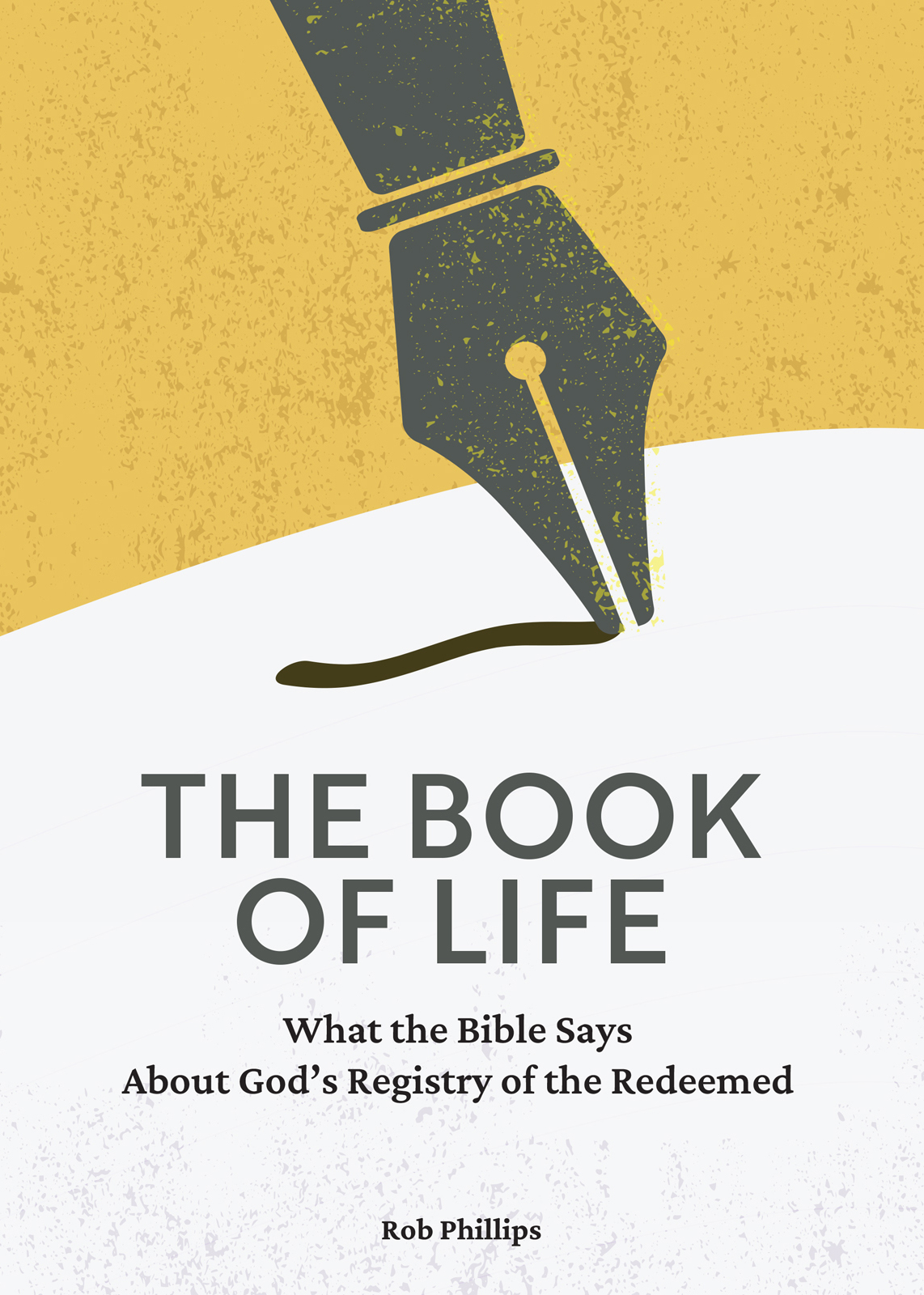
This is another in a series of excerpts from The Book of Life: What the Bible Says about God’s Registry of the Redeemed from High Street Press and available at Amazon. This except comes from Chapter 9: The Books Were Opened: Daniel 7:9-10.
As I kept watching, thrones were set in place, and the Ancient of Days took his seat. His clothing was white like snow, and the hair of his head like whitest wool. His throne was flaming fire; its wheels were blazing fire. A river of fire was flowing, coming out from his presence. Thousands upon thousands served him; ten thousand times ten thousand stood before him. The court was convened, and the books were opened (Dan. 7:9-10).
Daniel’s vision of the Ancient of Days expands our study of the book of life. That’s because Daniel sees, not a single book, but “books” opened in judgment. This foreshadows what John witnesses centuries later in his vision of the great white throne:
I also saw the dead, the great and the small, standing before the throne, and books were opened. Another book was opened, which is the book of life, and the dead were judged according to their works by what was written in the books (Rev. 20:12, emphasis added).
In final judgment, books are opened. Daniel doesn’t identify these books by name, tell us the quantity of the books opened, or even reveal who opens the books. But this much seems clear from the whole counsel of Scripture: while the redeemed are recorded in the book of life, other books evidently expose every person’s thoughts, deeds, and actions, resulting in various rewards for the saved and degrees of punishment for the lost.
It’s important to distinguish between the book of life and other books unsealed at final judgment. Entrance into the book of life is by God’s grace, secured through the finished work of Christ, and received by faith. The other books are not for the purpose of disclosing where a person spends eternity, but how.
The backstory
Let’s begin our study with the backstory of Daniel’s vision recorded in Daniel 7. Then, we’ll pursue a deeper understanding of the “books” to which Daniel refers.
Daniel’s life bridges the entire Babylonian captivity (605 – 539 BC). The Lord engages Daniel as his mouthpiece to the Jewish and Gentile worlds, declaring God’s present and future plans. A good portion of the book of Daniel is written in Aramaic. Perhaps this is because some of the messages are directed to Gentile world rulers, and Aramaic is the common language of the day in Mesopotamia.
As a teenager, Daniel is taken captive from his noble family in Judah and deported to Babylon, where he and other young Jewish men are immersed in Babylonian culture. There, Daniel spends the rest of his eighty-five years (or more), rising to the role of statesman by royal appointment, serving as confidante of kings and a prophet in the Babylonian and Medo-Persian Empires.
Daniel writes to provide a historical account of faithful Jews living in captivity, and to show that God is in control of heaven and earth, directing the forces of nature, the destiny of nations, and the care of his people.
Daniel 7 is significant for three reasons. First, it marks the literary turning point from historical accounts to visions. Second, it makes enormous impact on subsequent Jewish literature. Third, it carries substantial prophetic weight, especially in the book of Revelation.
The first eight verses of Daniel 7 record Daniel’s vision of four beasts: a lion, a bear, a leopard, and an unidentified beast with large iron teeth. Then, in verses 15-28, an angel reveals that these beasts represent successive kingdoms, all of which rise and fall, and all of which ultimately succumb to the Most High and his everlasting dominion.
The court is convened
Between Daniel’s vision (Dan. 7:1-8) and the angel’s interpretation (vv. 15-28) lie six verses that serve as the focus of our present study:
As I kept watching, thrones were set in place, and the Ancient of Days took his seat. His clothing was white like snow, and the hair of his head like whitest wool. His throne was flaming fire; its wheels were blazing fire. A river of fire was flowing, coming out from his presence. Thousands upon thousands served him; ten thousand times ten thousand stood before him. The court was convened, and the books were opened.
I watched, then, because of the sound of the arrogant words the horn was speaking. As I continued watching, the beast was killed and its body destroyed and given over to the burning fire. As for the rest of the beasts, their dominion was removed, but an extension of life was granted to them for a certain period of time.
I continued watching in the night visions, and suddenly one like a son of man was coming with the clouds of heaven. He approached the Ancient of Days and was escorted before him. He was given dominion and glory and a kingdom, so that those of every people, nation, and language should serve him. His dominion is an everlasting dominion that will not pass away, and his kingdom is one that will not be destroyed (Dan. 7:9-14).
Daniel sees thrones set in place and the Ancient of Days taking his seat. The text doesn’t say who occupies these thrones. Some commentators believe they’re reserved for angels, who accompany Christ at his return (Matt. 16:27; 25:31; 2 Thess. 1:7). Others believe the elders and heavenly creatures of Revelation 4 are gathered there. But similar imagery in Revelation 20:4 leaves no doubt that believers sit on thrones, and other passages of Scripture teach that the saints participate in some way in judgment (Luke 22:30; 1 Cor. 6:2; Rev. 3:21). Perhaps all these creatures are present as witnesses.
In any case, Daniel’s attention is on the Ancient of Days, not the surrounding thrones. As Yahweh takes his seat, Daniel sees that the Lord’s clothing is white as snow, indicating his unblemished moral purity (cf. Isa. 1:18; Hab. 1:13; Rev. 1:14). Because God is holy, he judges sin, and in this passage, it is primarily the sin of the antichrist and his empire that’s in focus. God’s white hair aptly symbolizes his eternal nature.
The Lord’s throne of flaming fire, with its blazing wheels, indicates his judgment of sin. And while it may seem strange to us that a throne has wheels, chariot-thrones are common in the Ancient Near East for kings and mythical gods. Ezekiel describes such a chariot-throne in more detail (Ezek. 1, 10). The river of fire coming from the throne depicts God’s judgment poured out on the wicked. The destruction by fire of the fourth beast corresponds to the smashing of the feet of clay by the great stone – the Messiah – in Daniel 2. Through all of this, we are to remember that “our God is a consuming fire” (Heb. 12:29).
The “thousands upon thousands” who serve Yahweh, and the “ten thousand times ten thousand” who stand before him, seem to indicate an angelic host (see Rev. 5:11). The later phrase is the square of the highest number for which ancient people have a word, indicating an innumerable body of witnesses.
Everything is set. The Ancient of Days has taken his seat. Witnesses surround the throne. The court is convened. And “the books” are opened.
The books are opened
Some Bible commentators say the “books” are symbolic of God’s memory of the thoughts, words, and deeds of every person. No doubt, the omniscient mind of God has unlimited capacity for these kinds of entries. However, like the book of life, these other books more likely are actual, written records, the contents of which may be shown to resurrected people standing before God’s throne.
In the context of Daniel 7, the books concern the life and works of the antichrist. Even so, it’s a sobering reminder that all people one day stand before God and give an account of our lives. As Stephen Miller comments:
Of course, one’s eternal destiny will be determined by whether one’s name is written in “the book of life” (cf. Dan. 12:1; Rev. 20:12, 15). After this is established, the reward of the believer or the degree of punishment for the lost will be fixed by what is inscribed in the record books.
God keeps a record of our lives. He holds us accountable for how we respond to his self-revelation in creation, conscience, Scripture, and the person and work of Christ, as well as how we manage the time, talents, relationships, and other gifts entrusted to us. The Lord knows our thoughts, which form the action plans for good and evil works. He hears our words, which reveal the true nature of our hearts, and for which we must give an account (Matt. 12:33-37). And, of course, he records our every act.
In various places, the Bible depicts God’s record of our lives as contained in heavenly books. No person escapes the creator’s interest or avoids a day of reckoning with him.
Bible commentators differ in their opinions about the identity of these books. Some contend that two books are revealed in Scripture: the book of deeds, or remembrances, and the book of life.5 German theologian Jurgen Roloff writes, “In the one are recorded the deeds and the failures of human beings…. The second, to be distinguished from the first, is the Book of Life; in it are written the names of those whom God has chosen for salvation.”
New Testament scholar David Aune argues that the Old Testament, along with early non-canonical Jewish and Christian literature, adds a third book to the list: the book of destiny, which records the history of the world and/or the destinies of people, even before they’re born.
Other commentators argue that the Bible should be included in the list of books as a basis for judgment, for it reveals God’s holy standards, mankind’s universal sinfulness, and the redemptive work of Christ. As Jesus says in John 12:48, “The one who rejects me and doesn’t receive my sayings has this as his judge: The word I have spoken will judge him on the last day.”
Alexander Campbell, an 18th century Irishman who became one of the founders of the Disciples of Christ and the Church of Christ, lists several “books” revealed in Scripture:
The book of nature – what God has revealed of himself through creation (Ps. 19:1; Rom. 1:20)
The book of remembrance – what God decides to remember, excluding what he chooses to forget (Mal. 3:16; Luke 8:17)
The Old Testament (John 5:34; 10:35)
The New Testament (John 12:48)
The record of every person’s works (John 5:29; 2 Cor. 5:10)
And the book of life, in which are written the names of the redeemed (Phil. 4:3; Rev. 13:8; 21:27).
As you can see, opinions abound regarding the books to which Daniel refers. Even the ancient Egyptians and Babylonians held to the concept of a book in which human deeds and destinies are recorded.
But Scripture makes one truth clear: The sum of a person’s life, no matter how noteworthy, is insufficient to merit favor with God. Without exception, men and women who stand before the great white throne in Revelation 20 are excluded from the book of life: “And anyone whose name was not found written in the book of life was thrown into the lake of fire” (Rev. 20:15).
Next: Seven observations about the unnamed books of Daniel 7.
 OnceDelivered.net